


Sports Muscle Recovery and Radial Shockwave Therapy
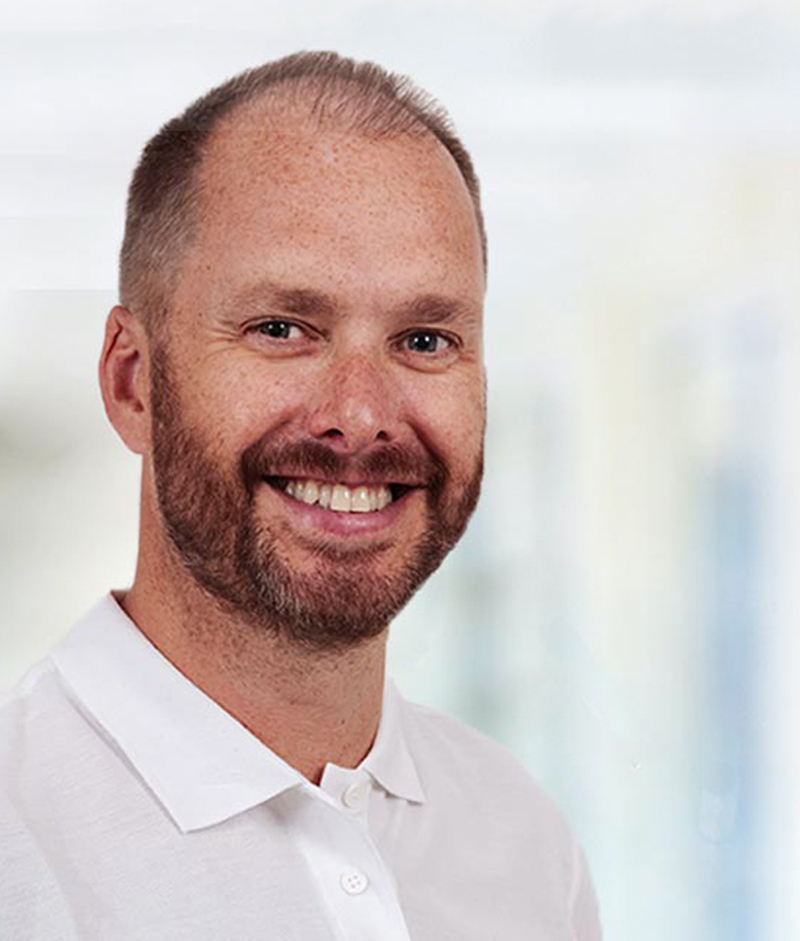
I am a consultant physiotherapist from the UK, and the data described here come from my doctoral research, which has now been published. The work concerns recovery in uninjured muscle tissue, which is the everyday problem of athletes who have to compete repeatedly with very little time between matches.
In my experience most people believe they know what shockwave therapy is, and then find they are less certain when the questions go a little deeper. Many are also unaware that there are two distinct types of shockwave.
What Shockwave Therapy Is, and How the Two Types Differ
Shockwave is a plug-in modality with a growing evidence base across a range of treatment types, including Achilles and patellar tendinopathy. It is thought to stimulate healing responses in tendon, bone and muscle, and focused shockwave in particular has been shown experimentally to influence stem cell activity, an important point because satellite cells form the basis of our understanding of muscle repair.
The two device families are focused shockwave and radial pressure wave. A light bulb offers a helpful comparison for the radial device. The light is strongest at the glass surrounding the bulb and diminishes quickly as it spreads across the room. Radial energy behaves in a similar way, with its highest value at the applicator and a rapid decline with distance, so the treatment is more superficial but delivered over a wider area. Focused shockwave is closer to a laser pointer, meaning an actual pointer rather than laser therapy. The energy can be focused at a defined depth, allowing treatment to be targeted more precisely and at greater depths.

Neither is necessarily better, and a number of studies have reported similar efficacy for some conditions, but they offer different things. Energy flux density is commonly used to describe focused shockwave energy, with values above approximately 0.25 mJ/mm² often described as high energy and values from approximately 0.12 mJ/mm² up to that threshold described as medium energy. Radial pressure wave produces a different pressure field and its energy falls rapidly with distance from the applicator. This makes it particularly well suited to treating a wider area of superficial tissue such as muscle, while focused shockwave can deliver energy to a more precisely defined target at greater depth.
From a Clinical Observation to a Research Question
The research began with something that happened to me. I was fortunate enough to play basketball for Great Britain as a masters player and captained the over-50s team. During one competition my muscles were too sore from training to train every day, and I was facing repeated high-intensity games with very limited recovery time. I decided to self-administer radial pressure wave to my aching muscles, and I observed less soreness and improved performance metrics.
I recognise that I am full of my own confirmation bias, and that this is no more compelling than a friend at the pub who says that rubbing some tree bark on his thigh made him feel better. As a scientist, I therefore looked at the problem more carefully. Cold water immersion, compression, nutrition, percussion devices and foam rollers all have variable evidence, and the magnitude of effect is often small and inconsistent. These interventions are also very difficult to compare against a placebo, because there is no placebo cold water and no convincing placebo compression.
Shockwave research has concentrated on tendon and bone, with little good-quality work on muscle, but there was a signal. In injured rat muscle, a single session was associated with larger regenerating fibres and higher satellite cell proliferation and differentiation (Zissler et al., 2017). The cellular cascade that follows training is broadly similar to the one shockwave appears to promote, which led to my first question: might shockwave, by promoting satellite cell activation, proliferation and differentiation, improve muscle recovery?
The Pilot Study and What It Taught Me
So that the work did not rest on an n of one, I designed a laboratory pilot comparing radial pressure wave with sham. We recruited 15 participants, two dropped out, and 13 completed. Baseline quadriceps strength was measured on a dynamometer, and eccentric loading on the same device then created exercise-induced muscle damage. Radial pressure wave or sham was applied to the quadriceps at 0, 24, 48 and 72 hours, and strength and soreness, using a visual analogue scale, were measured at each time point.
Recovery at 72 hours was 12% with radial pressure wave and 4% with sham, but neither the within-group nor the between-group differences were statistically significant. A type II error is a plausible explanation. By chance in the randomisation the sham group was weaker and less exposed to exercise, and the repeated-bout effect (Proske and Morgan, 2001) and neuromuscular learning of the strength test may also have contributed to a null response in that group. That is a normal part of science, and the signal was enough to continue.
Two further observations emerged. Shockwave may initially influence strength, which fits with literature reporting a tendency towards lower grip strength after treatment (Notarnicola et al., 2014). It also proved very difficult to construct a completely inert sham. We tried, and I do not believe we achieved it, although I began to wonder why shockwave should be held to this standard when cold water immersion is not.
There is evidence from other interventions such as prolonged static stretching and massage that muscle function can be affected temporarily following treatment. Whether radial pressure wave produces a comparable short-term effect in healthy muscle, and through what mechanism, remains uncertain. This is an important consideration when radial pressure wave is being used close to competition and warrants further investigation.
Exercise-Induced Muscle Damage as a Minor Muscle Injury
Since Armstrong’s work in 1984, our understanding of exercise-induced muscle damage has developed considerably. It involves Z-band disruption, sarcomere instability and calcium dysregulation (Armstrong, 1984; Proske and Morgan, 2001), which appear to account for the initial loss of force. A secondary inflammatory cascade follows (Tidball, 2005) and ends in delayed-onset muscle soreness, which can peak between 24 and 72 hours.

The British Athletics Muscle Injury Classification includes exercise-related generalised muscle soreness within grade 0b (Pollock et al., 2014), with MRI either appearing normal or showing features associated with delayed-onset muscle soreness. The Munich consensus uses a different classification system (Mueller-Wohlfahrt et al., 2013). Exercise-induced muscle damage can therefore sit at the very minor end of the muscle injury spectrum, so the target tissue is better described as muscle with a slight level of exercise-induced damage than as entirely healthy muscle. Much of the research behind standard recovery strategies is also industry-led, so it seems worth asking whether we are listening to dogma when athletes assume a cold plunge or a painful massage must be doing some good.
The Tournament Field Study
Although the pilot could be regarded as a failed study, it gave me enough information to change the protocol. I moved to a smaller portable Storz machine, now discontinued, and lowered the setting to 1.7 bar and 9 Hz. The pilot had used 2.5 bar and 12 Hz, following pathology treatment parameters, and I questioned why muscles that had already been through so much should receive such high energy. I made a judgment call, drawing on my background as a sports scientist and physiotherapist, that the lower setting would be a better protocol.
The device was applied to the quadriceps, hamstrings and calves in the way one might mow a lawn, moving up and down with overlap and then side to side so that each muscle was fully covered. Treating both legs took about 15 to 16 minutes per athlete.

We recruited 61 players, and 56 completed the study, with losses due to dropouts and a couple of injuries. The setting was an international masters basketball tournament in Italy in 2024, so the athletes were in real competition. Players were randomised, and one group received radial pressure wave within four hours of finishing their game on each of four group stage days. The control group followed their normal recovery strategies, without a placebo. The outcomes were athlete reported soreness, fatigue, recovery and sleep, which matter most to athletes and coaches in the moment. Blood markers can take time to return, and strength or jump testing during competition was not considered appropriate because of the additional physical load on the athletes. The study was reported as a feasibility trial (Hobrough et al., 2026).
What We Found
Muscle soreness was lower in the radial pressure wave group, by about 35% relative to control by day 4 (p < 0.001), and perceived recovery was better (p < 0.004). Fatigue and sleep did not differ significantly between-groups (Hobrough et al., 2026).
Three baseline points, at 7 days and 5 days before the tournament and on the morning of day one, showed the groups overlapping closely. The control group then followed a normal soreness trajectory for a tournament, whereas the shockwave group began to reduce its soreness and, by the morning of day five, reported less soreness than at baseline. Instead of getting worse over the tournament, they ended up better than when they arrived, which is a useful outcome for an athlete heading into a quarter-final, semi-final or final. Perceived recovery declined in the control group in the usual way and improved in the treated group, with clear differences towards the end of the tournament.
I am glad that sleep did not differ. Sleep, nutrition, hydration and rest are the fundamentals of recovery, and other strategies should only be layered on top once those have been properly considered. Had sleep improved in the shockwave group, I would have had much less confidence in the soreness results, since that group might simply have ended up in a better hotel. The absence of a between-group difference in sleep makes it less likely that differences in sleep explain the soreness findings.
Interpreting the Findings with Appropriate Caution
Radial shockwave may reduce muscle soreness and improve athlete reported recovery in a tournament setting. It would be a mistake to extrapolate this to a general statement that radial shockwave improves recovery. We had no biological markers, and the laboratory study, which did include objective strength measures, showed a null result, a pattern common in recovery research. The findings do not extend to recovery after a heavy resistance session, and we do not know whether treatment might blunt the supercompensation such a session is designed to produce.
The work appears to be the first of its kind in this specific sporting context, since the earlier experimental studies in this area involved induced muscle injury in animals. Other popular recovery modalities also have variable evidence. Cold water immersion, for example, has been studied using a wide range of temperatures and protocols, which makes studies difficult to compare. That does not mean it will not work for an individual athlete, only that the science for many recovery strategies remains mixed once sleep, hydration, nutrition and rest are set aside.
There is a practical consideration as well. Many professional sport settings and physiotherapy clinics already own a radial pressure wave device, so where one is already available no additional equipment is needed, and treating both legs takes about 15 to 16 minutes. The next step is to include biological markers, which is where my research is heading. I share short videos in a LinkedIn group called ESWT Hub, and I expect further research on shockwave for athletic muscle tissue, from myself and hopefully from others.
---
Frequently Asked Questions
Q: What is the difference between radial and focused shockwave therapy?
Radial devices deliver their highest energy at the applicator and disperse it rapidly over a wide, relatively superficial area, whereas focused devices deliver energy to a precise point in deeper tissue. A radial device at its 5 bar maximum produces about 0.22 mJ/mm², below the 0.25 mJ/mm² threshold for high energy on a focused device. Radial devices are therefore unsuited to bone but well suited to larger areas of muscle, and studies have reported similar efficacy for some conditions.
Q: Did radial shockwave improve muscle recovery in the tournament study?
Athletes who received radial shockwave after each game reported lower muscle soreness, with a reduction of about 35% relative to controls by day 4, and better perceived recovery (Hobrough et al., 2026). Fatigue and sleep did not differ between-groups. No biological markers or performance tests were collected, so the findings are best interpreted as a signal for tournament settings.
Q: Can these findings be applied to recovery after heavy resistance training?
They cannot be extended to that situation with any confidence. The study took place during a multi-day basketball tournament, and there is currently no evidence on whether shockwave might blunt the supercompensation that a heavy training session is intended to produce.
Q: What treatment parameters were used in the field study?
Treatment was applied with a portable radial device at 1.7 bar and 9 Hz, which is lower than the 2.5 bar and 12 Hz used in the earlier pilot. Quadriceps, hamstrings and calves were treated on both legs, moving up and down each muscle with overlap and then transversely, and each athlete took about 15 to 16 minutes. Sessions took place within four hours of the end of each game across four days of competition.
References
Armstrong, R.B. (1984) ‘Mechanisms of exercise-induced delayed-onset muscular soreness: a brief review’, Medicine and Science in Sports and Exercise, 16(6), pp. 529-538.
Hobrough, P., Hobrough, H., Paci, E., Chui, K.Y., Thomas, K. and Howatson, G. (2026) ‘The feasibility of radial shockwave therapy in enhancing recovery during an international basketball tournament’, The Journal of Sports Medicine and Physical Fitness, 66(9), pp. 1039-1048. doi:10.23736/S0022-4707.26.17910-9.
Mueller-Wohlfahrt, H.W., Haensel, L., Mithoefer, K., Ekstrand, J., English, B., McNally, S., Orchard, J., van Dijk, C.N., Kerkhoffs, G.M., Schamasch, P., Blottner, D., Swaerd, L., Goedhart, E. and Ueblacker, P. (2013) ‘Terminology and classification of muscle injuries in sport: the Munich consensus statement’, British Journal of Sports Medicine, 47(6), pp. 342-350.
Notarnicola, A., Quagliarella, L., Sasanelli, N., Maccagnano, G., Fracella, M.R., Forcignanò, M.I. and Moretti, B. (2014) ‘Effects of extracorporeal shock wave therapy on functional and strength recovery of handgrip in patients affected by epicondylitis’, Ultrasound in Medicine & Biology, 40(12), pp. 2830-2840.
Pollock, N., James, S.L.J., Lee, J.C. and Chakraverty, R. (2014) ‘British athletics muscle injury classification: a new grading system’, British Journal of Sports Medicine, 48(18), pp. 1347-1351.
Proske, U. and Morgan, D.L. (2001) ‘Muscle damage from eccentric exercise: mechanism, mechanical signs, adaptation and clinical applications’, The Journal of Physiology, 537(2), pp. 333-345.
Tidball, J.G. (2005) ‘Inflammatory processes in muscle injury and repair’, American Journal of Physiology -Regulatory, Integrative and Comparative Physiology, 288(2), pp. R345-R353.
Zissler, A., Steinbacher, P., Zimmermann, R., Pittner, S., Stoiber, W., Bathke, A.C. and Sänger, A.M. (2017) ‘Extracorporeal shock wave therapy accelerates regeneration after acute skeletal muscle injury’, The American Journal of Sports Medicine, 45(3), pp. 676-684.

Paul Hobrough (United Kingdom) is a sports physiotherapist, researcher and international educator specialising in shockwave therapy, athlete recovery and performance.
A former Great Britain international athlete, Paul represented GB in sprint and marathon kayaking for 16 years before building a career in elite sports medicine. He has worked with Olympic and world-class athletes and now combines more than 25 years of clinical experience with research into new applications of radial shockwave therapy in healthy athletes.


Comments