


What the Body Leaves Behind: Biofluid Signals in Recovery Monitoring

Disclosure: Biomonix is being developed by CareTech Human. This article reviews published research and distinguishes its findings from product capabilities that are still in development. CareTech Human is working on developing and validating additional measurements with Cornell, Weill Cornell Medicine and Cayuga Health, with plans to release them as they are validated.
For athletes and active people, monitoring often rests on signals from the heart and the nervous system. Morning HRV, resting heart rate and sleep metrics are cheap to collect, easy to trend and, used well, genuinely informative. Their limits are also familiar to readers of this blog: HRV describes how the heart is being regulated at a given moment, and it is not a window into every system involved in recovery.
Recovery after hard training, a long-haul flight, a week of short nights or a block in the heat also involves energy metabolism, fluid balance, tissue repair and digestion, and these need not return to baseline at the same speed as the autonomic markers we usually track. Some of these processes leave traces the body excretes every day. Urine reflects metabolism, fluid regulation and kidney handling. Stool and its volatile compounds reflect what gut microbes have done with the food that reached the colon. Outside a laboratory, almost nobody looks at either.
Urine and stool contain information about some of these processes. CareTech Human is
developing Biomonix, a toilet-integrated platform designed to collect selected signals during everyday bathroom visits with zero behavior change, no manual logging, and no consumables.
The current offering provides reports on urinary flow and voiding patterns. Additional chemical measurements related to hydration, recovery and fermentation are in development.
Urine After Exercise and Recovery Monitoring: a Clear Signal that Fades Quickly
A controlled study by Kistner and colleagues (2023) shows both the potential and the limits. Sixteen healthy, physically active young men cycled for 30 minutes at 50% and at 75% of VO2peak on separate occasions, in randomised order, with diet and fluid intake controlled. Using three complementary analytical platforms, the researchers found that the vigorous session produced a clearly larger shift in the urinary metabolome. The changes pointed where physiology would predict: metabolites of glycolysis (lactate, pyruvate), the TCA cycle, purine breakdown (hypoxanthine) and amino acid mobilisation (alanine).
Two details matter for anyone thinking about practical use. First, most of the changes appeared in urine produced within about 45 minutes of finishing, and the overall urinary metabolite profile returned to baseline within 24 hours. Second, some of the largest changes had nothing to do with exercise: urinary fructose rose sharply after both sessions. The authors suggested that honey and jam served at breakfast may have contributed. Urine records both what the body did and what it was fed, and the two can only be separated with context.
The study therefore shows that urine responds to exercise intensity in a graded way, with changes in metabolites linked to energy metabolism. It does not show that a morning sample can tell someone whether they are ready to train, and the authors describe their findings as potential markers that still need validation. A 30-minute ride is also a modest stressor for well-fed young men. The situations practitioners worry about, such as accumulated load across a congested fixture period, a match followed by a flight, or training through a heatwave on short sleep, remain largely untested in urine. This is precisely where Biomonix Metabolic Recovery Intelligence aims to add value: moving beyond isolated spot checks to evaluate an athlete's personalized return-to-baseline trajectory over time.

Hydration: a Response, not a Verdict
Hydration advice is often reduced to a daily volume target, while real fluid needs vary with body size, activity, climate and diet. Drinking more is not automatically safer: sustained overdrinking during prolonged exercise can contribute to exercise-associated hyponatraemia, which the international consensus statement describes as a potentially life-threatening condition (Hew-Butler et al., 2015).
Urine is the most accessible window onto fluid regulation, and the evidence shows both its value and its trap. In a five-day inpatient crossover trial, Perrier and colleagues (2013) switched 52 young adults between 1.0 and 2.5 litres of water a day. Urine concentration, colour and volume tracked the change in intake within 24 hours, while plasma and saliva osmolality did not respond. Urine values also varied with time of day, and afternoon samples came closest to the 24-hour picture.
The drawback is treating a single sample as a diagnosis. When Hew-Butler and colleagues (2018) compared blood and urine spot checks from 318 collegiate athletes, urine thresholds labelled between 27% and 55% of them as dehydrated, depending on the cut-off, yet none met the clinical definition based on serum sodium. The authors advised against using urine indices to diagnose or monitor dehydration, because urine output is the kidney's response to blood tonicity rather than a reflection of it.
We take that argument seriously, and it shapes the product. Biomonix does not diagnose dehydration. What urine captures well is the response itself: how strongly the kidneys are conserving or shedding water, how much is voided and when. Tracked over days, at known times, against a person's own baseline and alongside training, heat and intake, that response can reveal patterns a single reading cannot, including a run of very dilute, high-volume voids suggesting that intake is running well ahead of need. Tracked over time, this provides a true Personalized Hydration Balance instead of chasing generic water goals.
Gut Fermentation: What Reaches the Colon, and What Comes Out
Changes to fibre, protein, probiotics or meal timing are among the most common nutritional interventions active people make, and among the hardest to evaluate. A food diary records what went in, and symptoms record how someone felt. Neither shows what the gut microbes did with it.
Colonic microbes ferment carbohydrates and proteins, usually at the same time. Carbohydrate fermentation yields mainly short-chain fatty acids such as acetate, propionate and butyrate, whereas protein fermentation produces a different profile that includes ammonia, branched-chain fatty acids, phenols and indoles. The balance depends on which substrates reach the colon, on transit time and on the individual microbiome (Windey, De Preter and Verbeke, 2012; Oliphant and Allen-Vercoe, 2019).

There is no fermentation ratio that is ideal for everyone. More carbohydrate fermentation is not better if it brings bloating or diarrhoea, and less protein fermentation is not better if it comes from eating less protein than training requires. The useful question is personal: does a given change shift my pattern, and does that shift repeatedly coincide with better comfort and regularity?
That question is the focus of Biomonix's planned Fermentation Balance feature, which is in development. It is intended to use digital olfaction (sensor fusion e-nose technology) to read volatile organic compound patterns above stool during a bowel movement and compare changes with the user's own baseline, alongside bowel rhythm and dietary changes the user logs. The aim is to help people notice whether a change in diet, such as adding fibre, changing protein sources or trying a new supplement, repeatedly coincides with a shift in their fermentation-related pattern toward their personal "best-response zone”.
This is pattern tracking, not a direct measurement of how much fermentation occurred. Most
short-chain fatty acids are absorbed through the colon wall before stool is passed (den Besten et al., 2013), so stool and its headspace cannot quantify total fermentation. They may, however, offer a useful way to observe within-person changes over time.
A related clinical study offers a reason to investigate this approach. In patients with irritable bowel syndrome, faecal volatile profiles were associated with how patients responded to a dietary intervention (Rossi et al., 2018). That was a clinical study, not a trial of Biomonix, and it does not establish the same results in healthy active people. It does show why stool volatile patterns are of scientific interest when studying diet-related changes.
Timing and Rhythm
Chemistry is only part of the picture. How often someone urinates, when, and how output is spread across day and night forms a pattern of its own. In a cross-sectional study of 1,086 older adults, more frequent night-time voiding was associated with poorer actigraphy-measured sleep, including lower sleep efficiency and more time awake after sleep onset (Obayashi, Saeki and Kurumatani, 2015). The study was observational and in older adults, so it cannot show that voiding caused the poorer sleep, or that the relationship holds in athletes.
The practical value is simpler. A repeated record of night-time voids, viewed alongside sleep data from wearables like WHOOP or Oura, can help someone notice whether the two tend to occur together. It cannot establish that late-day fluid intake caused disrupted sleep. Biomonix's current Flow and Voiding report records voiding frequency, volume and flow, and can be shared with a clinician if a pattern needs to be discussed.
A Note on Women's Data
Much of what we know about exercise physiology comes from men. In an analysis of 5,261
publications across six sport and exercise science journals, women made up 34% of participants; 6% of studies included only women, against 31% that included only men (Cowley et al., 2021). The urinary metabolomics study above is typical: sixteen men, no women, and its authors note that the results cannot be transferred directly to other groups.
The picture is uneven, though. Both hydration studies cited here were mostly female: 79% of participants in Perrier and colleagues (2013) and 193 of 318 athletes in Hew-Butler and colleagues (2018). For women, menstrual-cycle phase can add important context to fluid balance, gut function and urinary signals.
Biomonix is designed for use by women and men, with patterns interpreted against each person's own baseline. To support shared households seamlessly, the system incorporates patented Personal Volatilome Fingerprint™ technology, which automatically recognizes individual users by their chemical signature without requiring manual switching or buttons. That design goal is not, by itself, proof of equal accuracy across sexes. The studies reviewed here, like the field more broadly, leave gaps in the evidence. Cycle phase is relevant context, but the current product offering does not claim to track it automatically.
How Biomonix Works, and What it is Not

Biomonix mounts under the toilet rim and works during normal use, with nothing to wear, collect or log. Engineered with strict Privacy by Design, it contains no cameras and no microphones.
A digital olfaction sensor reads chemical patterns from the headspace, and these are combined with flow, volume, timing and elimination rhythm, with automated Environmental Matrix Normalization for humidity, temperature and background chemistry. It tells the visits of different household members apart automatically.
The current early-access offering provides reports on urinary flow and voiding patterns.
Features for chemical measurements related to hydration, metabolic recovery and fermentation are in development and are intended to be introduced as they are validated.
Biomonix is a general wellness device and is not intended to diagnose, treat or prevent any
condition.
Practical Points for Practitioners
Treat a single urine reading as a response, not a verdict. It reflects the last few hours of intake and activity. Compare like with like: the same time of day, similar circumstances.
Context is not optional. Food, fluid, travel, heat, sleep, medication and, for women, cycle phase all move biofluid signals. Without a record of them, a trend is hard to interpret.
Change one nutritional variable at a time and give it several days. Gut responses are personal and noisy.
Watch both directions on fluid. Persistently dilute, high-volume urine around long sessions deserves as much attention as concentrated urine.
Use biochemical signals alongside HRV, sleep and the person's own report. When they disagree, the disagreement is information, not noise to be averaged away.
Conclusions
The most useful metric is rarely the most dramatic one. It is usually a signal measured consistently, interpreted against a person's own baseline and read in context. Urine has been part of clinical medicine for centuries; the opportunity now is to bring it, and stool chemistry, into everyday monitoring carefully and with a clear view of what these signals can and cannot tell us.
Learn more about Biomonix and early access at biomonix.caretechhuman.com
---
Frequently Asked Questions
Q: Can urine tell me whether someone has recovered from exercise?
Not on its own, and not yet in a validated way. Controlled studies show that urinary metabolites shift with exercise intensity in a predictable direction, but after a 30-minute session the changes were largely gone within hours and the next-morning sample matched baseline (Kistner et al., 2023). Whether repeated measurement after heavier or accumulated loads adds useful information to HRV, sleep and wellness questionnaires is the open question.
Q: Are urine colour and specific gravity reliable hydration tests?
Urine colour and specific gravity should not be used on their own to diagnose or monitor dehydration. In Hew-Butler et al. (2018), spot urine thresholds classified 27–55% of collegiate athletes as dehydrated even though blood sodium was normal in all of them. Urine measures can provide context, but they need to be interpreted alongside other information and should not be treated as a stand-alone hydration verdict.
Q: What does a stool volatile signal actually measure?
A pattern of volatile compounds relative to the same person's earlier readings. Because most short-chain fatty acids are absorbed in the colon (den Besten et al., 2013), stool cannot show how much fermentation occurred in absolute terms. A repeated shift after a dietary change may still be informative when considered alongside comfort, bowel rhythm and other context.
Q: Is Biomonix a medical device?
No. It is a general wellness device and does not diagnose any condition. It can generate a report on urinary flow and voiding patterns that a user may choose to share with a doctor.
Q: Why does a personal baseline matter more than a population range?
Because fluid needs, gut fermentation and urinary chemistry vary widely between people and within the same person over time, and because much of the reference research comes from narrow groups, most often young men.
Comparing each person with their own history avoids judging everyone against an average that may not describe them.
References
Cowley, E. S., Olenick, A. A., McNulty, K. L., & Ross, E. Z. (2021). “Invisible Sportswomen: The Sex Data Gap in Sport and Exercise Science Research.” Women in Sport and Physical Activity Journal, 29(2), 146-151. https://doi.org/10.1123/wspaj.2021-0028
den Besten, G., et al. (2013). “The role of short-chain fatty acids in the interplay between diet, gut microbiota, and host energy metabolism.” Journal of Lipid Research, 54(9), 2325–2340. https://doi.org/10.1194/jlr.R036012
Hew-Butler, T., et al. (2015). “Statement of the 3rd International Exercise-Associated Hyponatremia Consensus Development Conference.” British Journal of Sports Medicine, 49, 1432–1446. https://doi.org/10.1136/bjsports-2015-095004
Hew-Butler, T. D., et al. (2018). “Dehydration is how you define it: comparison of 318 blood and urine athlete spot checks.” BMJ Open Sport & Exercise Medicine, 4(1), e000297. https://doi.org/10.1136/bmjsem-2017-000297
Kistner, S., et al. (2023). “Acute effects of moderate vs. vigorous endurance exercise on urinary metabolites in healthy, young, physically active men: A multi-platform metabolomics approach.” Frontiers in Physiology, 14, 1028643. https://doi.org/10.3389/fphys.2023.1028643
Obayashi, K., Saeki, K., & Kurumatani, N. (2015). “Quantitative association between nocturnal voiding frequency and objective sleep quality in the general elderly population: the HEIJO-KYO cohort.” Sleep Medicine, 16(5), 577–582. https://doi.org/10.1016/j.sleep.2015.01.021
Oliphant, K., & Allen-Vercoe, E. (2019). “Macronutrient metabolism by the human gut microbiome: major fermentation by-products and their impact on host health.” Microbiome, 7, 91. https://doi.org/10.1186/s40168-019-0704-8
Perrier, E. T., et al. (2013). “Circadian variation and responsiveness of hydration biomarkers to changes in daily water intake.” European Journal of Applied Physiology, 113(8), 2143–2151. https://doi.org/10.1007/s00421-013-2649-0
Rossi, M., et al. (2018). “Volatile Organic Compounds in Feces Associate With Response to Dietary Intervention in Patients With Irritable Bowel Syndrome.” Clinical Gastroenterology and Hepatology, 16(3), 385–391.e1. https://doi.org/10.1016/j.cgh.2017.09.055
Windey, K., De Preter, V., & Verbeke, K. (2012). “Relevance of protein fermentation to gut health.” Molecular Nutrition & Food Research, 56(1), 184–196. https://doi.org/10.1002/mnfr.201100542

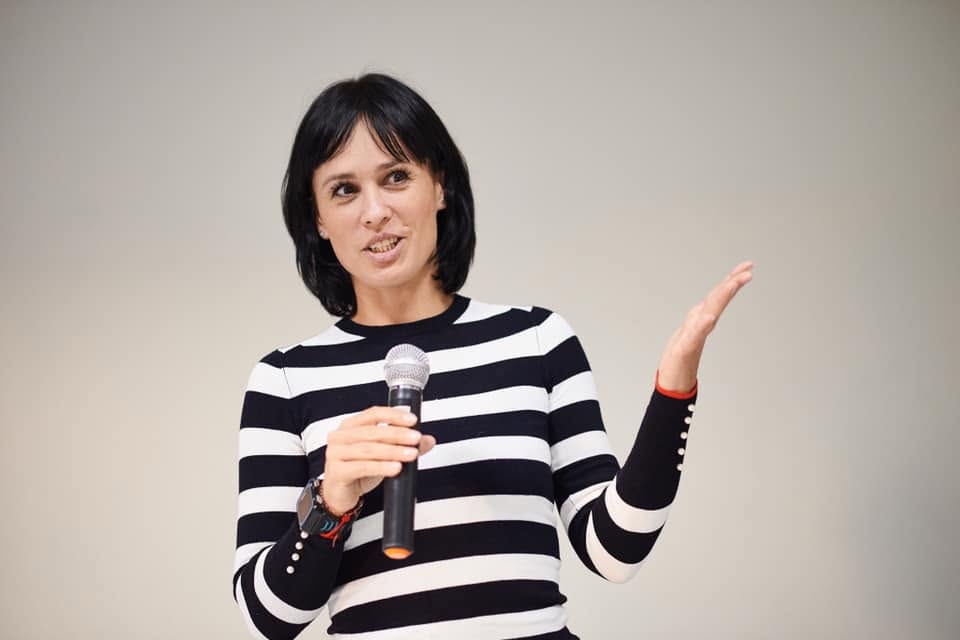
Irina Belenkaya is Head of Operations at CareTech Human, where she leads operations, fundraising and company growth. An engineer with an MBA, she has worked in digital health since 2018, including contributing to the digital transformation of Ukraine’s healthcare system. A six-time IRONMAN finisher, Irina brings an athlete’s perspective to questions of recovery and health monitoring.



Comments