


The Reactive Strength Paradox of the Healthy Achilles Tendon
Discussions of the Achilles tendon usually begin with pathology, and less often with what a healthy tendon contributes to performance. This article presents a framework for thinking about the healthy Achilles tendon and about how it can be loaded across a season in team sports. I work as a physical therapist and as a strength coach, and most of what I do sits in the space between physical preparation and reconditioning. Working in that space, I keep coming back to a problem that is easy to overlook: it is difficult to say what a healthy Achilles tendon is. There is no well-established consensus on what health looks like, on what goes into it, or on how it can be found operationally, and consensus on tendinopathy is therefore also hard to reach. The definition nevertheless changes the decisions we make about the inputs and interventions we use to move a tendinopathic tendon toward a healthier state.
Tendinopathy is often described as a performance-limiting condition. If we turn that description around, what interests me is a healthy tendon as a structure that enhances performance. My examples come mainly from basketball, where a player faces 82 games in a season and sometimes four to five games in a week, so the question is how we train the tendon and how we maintain it in season. I believe the framework applies equally to other team, field and court sports.
What a Healthy Tendon Does for the Athlete
The energy-based framework of Roberts and Azizi (2011) is the one I find most useful for thinking about what the tendon contributes. In power amplification, elastic strain energy is stored and then returned during recoil, which allows the velocity of the muscle-tendon unit, and therefore its instantaneous power, to exceed what the contractile element could produce alone. This supports actions such as acceleration and helps to preserve contractile tissue. In power attenuation, the elastic element reduces the lengthening velocity of the contractile element and limits negative muscle power during landing, descent and braking, so that the muscle can behave in a quasi-isometric way while the tendon buffers part of the initial impulse. Finally, the tendon reduces the metabolic cost of steady-state locomotion, because less contractile work is needed and there is less demand for ATP (Sawicki, Lewis and Ferris, 2009; Roberts and Azizi, 2011).
I group these functions under what I call action capabilities: acceleration, deceleration, jumping and sprinting, which together make up changing of direction. It is often presumed that the tendon matters mainly for jumping, but it takes part in all of them. In a jump the centre of mass changes direction vertically, in acceleration there is positive work, and in deceleration there is a reduction of momentum, which is also a change of direction. If we protect the tendon and improve its function across these domains, we support performance as well as tendon health.
From the Ground Reaction Force to Stiffness
I define a healthy tendon as a mechanically competent connective tissue that moderates impulse between muscle and bone. The sequence begins with the ground reaction force, which is a vector and therefore has a direction as well as a magnitude. At the ankle it creates an external dorsiflexion moment, which the body meets with an internal plantar flexion moment produced by the gastrocnemius-soleus complex. That muscle force becomes tendon force, and tendon force divided by cross-sectional area gives tendon stress, so that for the same force a larger tendon experiences less stress.
Practitioners often treat stiffness as the thing to adapt, but I see it as the result of two simpler components. Morphology, meaning the size of the tendon, influences the stress it experiences. The material, meaning the organisation, architecture and quality of the collagen fibres, influences the strain it experiences. Training acts on these two components, and stiffness follows from them. This is consistent with the framework of Kalkhoven, Watsford and Impellizzeri (2020), in which physiology determines mechanical properties, and these determine whether an external load becomes a stress or strain that exceeds capacity. A second distinction is between capacity and tolerance. The system can produce a certain amount of force, which is a neurological matter, and the tissue can tolerate a certain amount of force, which is a structural and biological matter. When the two are mismatched, for example in an athlete who can produce force quickly but lacks the tendon stiffness and underlying morphology and material to match, there is a mechanical cost.
"Tendinopathy is often described as a performance-limiting condition. If we turn that description around, what interests me is a healthy tendon as a structure that enhances performance."
Working From the Game Towards the Tissue
To see why this matters, I start from the goal of the game and work forward. In basketball, and in many team sports, the goal is to create chances to score and to prevent the opponent from doing the same, which I think of as invasion and evasion. Both are forms of changing direction, that is, manipulating one's mass in motion. With ten players on a court of 94 by 50 feet, space is tight and time is finite, so the tasks are essentially space and pace: space to get an unimpeded shot, and transition opportunities as often as possible.

The actions that support these tasks come down to impulse and momentum. Impulse is the time history of force and is proportional to the change in momentum. A given impulse can be obtained with more time and less force, but sport shrinks the time available, so what matters is creating force fast. This is where the demands of the game become internal capacities, which are what practitioners actually manipulate. The nervous system contributes to these capacities from the top down, and biology contributes from the bottom up by building the structure that lets the tissue cope with the forces the athlete generates and receives.
The consequences of the game are the mechanical and energetic costs that accumulate as actions repeat. I draw here on the mechanical fatigue framework of Edwards (2018), in which overuse injury arises when repeated loading accumulates faster than the tissue can recover. The Achilles is used in landing and plyometric tasks, but also in the other action capabilities, so its exposure is broader than jumping alone, and I try to avoid a narrow focus on plyometrics when examining and restoring capabilities. A tendon with adequate stiffness lets the muscle stay in a favourable length-tension position and operate at a lower shortening velocity, and this makes the tasks of space and pace easier.
Constraints, Mental Models and Vertical Integration
Two constraints shape my decisions. The first is that neurological and biological adaptations occur on asymmetric time scales. Coordination, motor unit recruitment and synchronisation adapt quickly, whereas cross-sectional area, sarcomeres added in series and tendon material and morphology take longer, and I do not want neural adaptation to get ahead of biological adaptation. The second is the multiplicity of action capabilities, which call for different force-producing qualities, so I try not to be rigid in what I program.
As a safeguard in decision making I use mental models, beginning with two quotations. Richard Feynman said that the first principle is that you must not fool yourself, and that you are the easiest person to fool (Feynman, 1974). George Box wrote that all models are wrong (Box, 1976), later phrased as all models being wrong but some being useful (Box and Draper, 1987). If models are incomplete and judgement is fallible, decisions should be structured to tolerate error. I try to protect the downside, preserve reversibility and diversify inputs to hedge against second-order consequences, which are the effects that appear down the road and not acutely. I prefer satisficing to maximising, because maximising one variable puts all the resources in one basket, whereas an index fund spreads them so that one poor performer can be offset. The loading of the Achilles can be designed in the same way.
In practice, this leads me to vertical integration. Block periodization builds hypertrophy and biology with high volumes and adds intensity closer to the season. I think it is best suited to athletes such as Olympic weightlifters, who face a narrow set of tasks. In vertical integration we undulate the inputs according to how long the tissue or neurological feature needs to adapt, training several qualities concurrently and shifting the emphasis across the off-season and season. For team sport athletes, seen as complex systems, this seems more appropriate, and I think of it in terms of three Rs. It supports retention, because critical strength qualities do not decay. It respects the rate limiter, because it allows prioritisation and exclusion. And it is robust rather than overly precise, because one can precisely miss the target and then find the consequences hard to reverse.
Loading Methods, the Envelope of Function and the Paradox
To discuss loading I use the classical methods of strength development (Zatsiorsky, Kraemer and Fry, 2021) together with Dye's (2005) envelope of function. The envelope has four zones: subphysiological underload, in which the tissue deconditions; homeostasis, in which current capacity is maintained; supraphysiological overload, in which capacity is transiently exceeded and, if dosed appropriately, adaptation can follow in a hormetic way; and structural failure, in which the recoverability of the tissue is exceeded.

The maximum effort method is beneficial for the muscle and can be for the tendon, but if the intensity is too high I may improve neurological force generation more than I load the tendon, and without attention to weekly dosing the tendon may approach the zone of structural failure. The repetition effort method, with lighter loads taken close to failure, is a good stimulus for the muscle because mechanical tension mediates hypertrophy, but the external load does not increase as failure approaches, so mechanical strain on the tendon stays low. Sets of twelve to twenty repetitions may therefore be less suited to the tendon, although they can be a useful exposure when it is irritable. The submaximal effort method is probably the most beneficial for the tendon, because it balances intensity with volume and lets me challenge the tendon without allowing muscle strength to outpace tendon stiffness, the situation in which pathology-driven outcomes become more likely.
Explosive strength is trained with the dynamic effort method, and because the emphasis is on condensing time I can also use ballistic isometrics, in which there is no displacement but the intent to produce force is very high. Reactive strength, the ability to switch from an eccentric to a concentric contraction, is where the paradox arises. It is often said that plyometric and stretch-shortening cycle activities expose and promote the tendon. I would place them at the bottom of the envelope, in subphysiological underload, because brief ground contact times may not allow the threshold to be reached at which the tenocytes sense mechanical tension and the tissue adapts structurally (Arampatzis, Karamanidis and Albracht, 2007; Arampatzis et al., 2010). At the same time, repeated stretch-shortening actions with high ground reaction forces can place plyometrics near structural failure, because the tendon may be exposed to loading it cannot recover from. I therefore see reactive strength work as mainly improving coordination and bridging the gap, and not necessarily as an effective stimulus for the tendon.
"The Achilles is used in landing and plyometric tasks, but also in the other action capabilities, so its exposure is broader than jumping alone, and I try to avoid a narrow focus on plyometrics when examining and restoring capabilities."
A Decision Framework for Tendon Loading
I present the loading options as a decision tree that a practitioner can adapt, and not as an algorithm. A healthy Achilles tendon should tolerate high strain, and I start with submaximal effort isotonics such as heavy slow resistance. Repetition effort isotonics can be appropriate when the individual is highly sensitive or irritable, or when muscle cross-sectional area limits the strain that can be applied. Maximal eccentrics and submaximal eccentrics are further options, followed by maximal isometrics, and if these cannot be done I extend the duration, which lowers the magnitude and rate of strain and can temper symptoms. Contraction type matters less than preference and provocation, and the real mediator is the magnitude of strain the tendon sees (Bohm, Mersmann and Arampatzis, 2015). If none of this is tolerated, blood flow restriction can serve as a temporary bridge to something more suitable (Centner et al., 2019).
I group the options into themes. Strain rate, developed through ballistic isometrics and fast or maximal eccentrics, is the most stressful for the tendon, so I reserve it for out-of-season and the middle of the off-season. Strain tolerance, developed through low-intensity, long-duration loading, submaximal isometrics and attention to motor control and torque steadiness, suits high-minute players early in the off-season, when I want to recalibrate without adding much stress. Strain magnitude develops stiffness through material and morphological change and is the greatest return for the effort, using maximal isometrics and submaximal isotonics with a slightly higher external load. Across a macrocycle I shift among these themes in the spirit of vertical integration, keeping some ballistic isometrics to preserve rate of strain and to bridge toward plyometrics, submaximal isometrics as diversification, and maximal effort isotonics to balance muscle and tendon.
The adaptive timeline explains this ordering. Neurological adaptations from maximal and dynamic effort work appear within weeks, muscle adaptations follow, and tendon structure takes considerably longer, up to several months. If muscle force applied to the tendon increases without a comparable adaptation of tendon resilience, the tissue is exposed to high strain at high force levels, and the risk of injury is high (Arampatzis, Karamanidis and Albracht, 2007; Mersmann, Bohm and Arampatzis, 2017; Bohm, Mersmann and Arampatzis, 2019). In the acquisition phase of the off-season I therefore start with submaximal effort methods, to develop tendon structure earlier, and delay maximal and dynamic effort exposures, while repetition effort work can stay where it is because it develops biology alongside the muscle.
Executing the Load
I execute exercises with three ingredients in mind. The first is length loaded: when an athlete is not tendinopathic or sensitive and has no insertional tendinopathy, I work toward the descending limb or outer range so that a sufficient magnitude of mechanical strain is applied. The second is moment matching, which asks where the muscle can produce the most force. This relates to the length-tension relationship, but it is also about the moment, since increasing the external dorsiflexion moment increases the internal plantar flexion moment and therefore total force, and potentially stress and strain. The third is region reach: on the stress-strain curve, working in the descending or outer range helps to uncrimp the collagen fibres and exposes them to an appreciable amount of strain.

In Practice
The stiffness of a healthy Achilles tendon comes from its morphology and material, and these respond to the magnitude, rate and tolerance of the strain we apply. I consider submaximal effort methods, executed with attention to length loaded, moment matching and region reach, as the most reliable input for tendon capacity, and I consider reactive strength work as a less effective primary stimulus than is commonly assumed. Vertical integration across the off-season and season keeps muscle and tendon in balance and allows for the errors that any of our models will contain.
---
Frequently Asked Questions
Q: What does a healthy Achilles tendon contribute to athletic performance?
According to the energy-based framework of Roberts and Azizi (2011), a healthy tendon contributes through power amplification, power attenuation and a lower metabolic cost of steady-state locomotion. In amplification, stored elastic strain energy is returned during recoil, so that the muscle-tendon unit reaches a power that the contractile element could not produce alone. In attenuation, the tendon limits the lengthening velocity of the muscle and negative muscle power during landing, descent and braking. These functions support action capabilities, namely acceleration, deceleration, jumping and sprinting, and not jumping alone.
Q: Why is tendon stiffness described as the result of its size and material?
Stiffness is presented as the result of two simpler components: morphology, meaning the size of the tendon, and material, meaning the organisation, architecture and quality of the collagen fibres. Morphology influences the stress the tendon experiences, because tendon force divided by cross-sectional area gives stress, whereas the material influences the strain. Training acts on these two components, and stiffness follows from them. This is consistent with the framework of Kalkhoven, Watsford and Impellizzeri (2020), in which physiology determines mechanical properties and these determine whether an external load exceeds capacity.
Q: Which loading methods are considered most useful for the Achilles tendon?
The submaximal effort method, such as heavy slow resistance, is regarded as probably the most beneficial for the tendon, because it balances intensity and volume and does not allow muscle strength to outpace tendon stiffness. The maximum effort method may improve neurological force generation more than it loads the tendon, and the repetition effort method, with lighter loads close to failure, keeps tendon strain low, although it can be a useful exposure for an irritable tendon. The mediator is the magnitude of strain the tendon experiences, and contraction type matters less than preference and provocation (Bohm, Mersmann and Arampatzis, 2015). When none of these options is tolerated, blood flow restriction can serve as a temporary bridge (Centner et al., 2019).
Q: What is the reactive strength paradox?
Plyometric and stretch-shortening cycle exercises are often said to expose and promote the tendon, but they are placed at the bottom of Dye's (2005) envelope of function, in subphysiological underload, because brief ground contact times may not allow the threshold for structural adaptation to be reached (Arampatzis, Karamanidis and Albracht, 2007; Arampatzis et al., 2010). At the same time, repeated stretch-shortening actions with high ground reaction forces can bring the tendon near structural failure. Reactive strength work is therefore seen mainly as improving coordination and bridging the gap, and not necessarily as an effective stimulus for the tendon.
Q: What is vertical integration, and why is it suggested for team sport athletes?
Vertical integration is a programming approach in which several strength qualities are trained concurrently and the emphasis shifts across the off-season and season, as an alternative to sequential block periodization. It is presented as more appropriate for team sport athletes, seen as complex systems, than for athletes with a narrow set of tasks such as Olympic weightlifters. The rationale rests on three points: it supports retention of critical strength qualities, it respects the rate limiter by allowing prioritisation and exclusion, and it is robust and not overly precise. It also takes into account the asymmetric time scales of adaptation, since neurological changes occur within weeks whereas tendon structure may take up to several months.
References
Arampatzis, A., Karamanidis, K. and Albracht, K. (2007) 'Adaptational responses of the human Achilles tendon by modulation of the applied cyclic strain magnitude', Journal of Experimental Biology, 210(15), pp. 2743-2753. doi:10.1242/jeb.003814.
Arampatzis, A., Peper, A., Bierbaum, S. and Albracht, K. (2010) 'Plasticity of human Achilles tendon mechanical and morphological properties in response to cyclic strain', Journal of Biomechanics, 43(16), pp. 3073-3079. doi:10.1016/j.jbiomech.2010.08.014.
Bohm, S., Mersmann, F. and Arampatzis, A. (2015) 'Human tendon adaptation in response to mechanical loading: a systematic review and meta-analysis of exercise intervention studies on healthy adults', Sports Medicine - Open, 1(1), p. 7. doi:10.1186/s40798-015-0009-9.
Bohm, S., Mersmann, F. and Arampatzis, A. (2019) 'Functional adaptation of connective tissue by training', Deutsche Zeitschrift für Sportmedizin, 70, pp. 105-110. doi:10.5960/dzsm.2019.366.
Box, G.E.P. (1976) 'Science and statistics', Journal of the American Statistical Association, 71(356), pp. 791-799.
Box, G.E.P. and Draper, N.R. (1987) Empirical model-building and response surfaces. New York: Wiley.
Centner, C., Lauber, B., Seynnes, O.R., Jerger, S., Sohnius, T., Gollhofer, A. and König, D. (2019) 'Low-load blood flow restriction training induces similar morphological and mechanical Achilles tendon adaptations compared with high-load resistance training', Journal of Applied Physiology, 127(6), pp. 1660-1667. doi:10.1152/japplphysiol.00602.2019.
Dye, S.F. (2005) 'The pathophysiology of patellofemoral pain: a tissue homeostasis perspective', Clinical Orthopaedics and Related Research, (436), pp. 100-110. doi:10.1097/01.blo.0000172303.74414.7d.
Edwards, W.B. (2018) 'Modeling overuse injuries in sport as a mechanical fatigue phenomenon', Exercise and Sport Sciences Reviews, 46(4), pp. 224-231. doi:10.1249/JES.0000000000000163.
Feynman, R.P. (1974) 'Cargo cult science', Engineering and Science, 37(7), pp. 10-13.
Kalkhoven, J.T., Watsford, M.L. and Impellizzeri, F.M. (2020) 'A conceptual model and detailed framework for stress-related, strain-related, and overuse athletic injury', Journal of Science and Medicine in Sport, 23(8), pp. 726-734. doi:10.1016/j.jsams.2020.02.002.
Mersmann, F., Bohm, S. and Arampatzis, A. (2017) 'Imbalances in the development of muscle and tendon as risk factor for tendinopathies in youth athletes: a review of current evidence and concepts of prevention', Frontiers in Physiology, 8, p. 987. doi:10.3389/fphys.2017.00987.
Roberts, T.J. and Azizi, E. (2011) 'Flexible mechanisms: the diverse roles of biological springs in vertebrate movement', Journal of Experimental Biology, 214(3), pp. 353-361. doi:10.1242/jeb.038588.
Sawicki, G.S., Lewis, C.L. and Ferris, D.P. (2009) 'It pays to have a spring in your step', Exercise and Sport Sciences Reviews, 37(3), pp. 130-138. doi:10.1097/JES.0b013e31819c2df6.
Zatsiorsky, V.M., Kraemer, W.J. and Fry, A.C. (2021) Science and practice of strength training. 3rd edn. Champaign, IL: Human Kinetics.

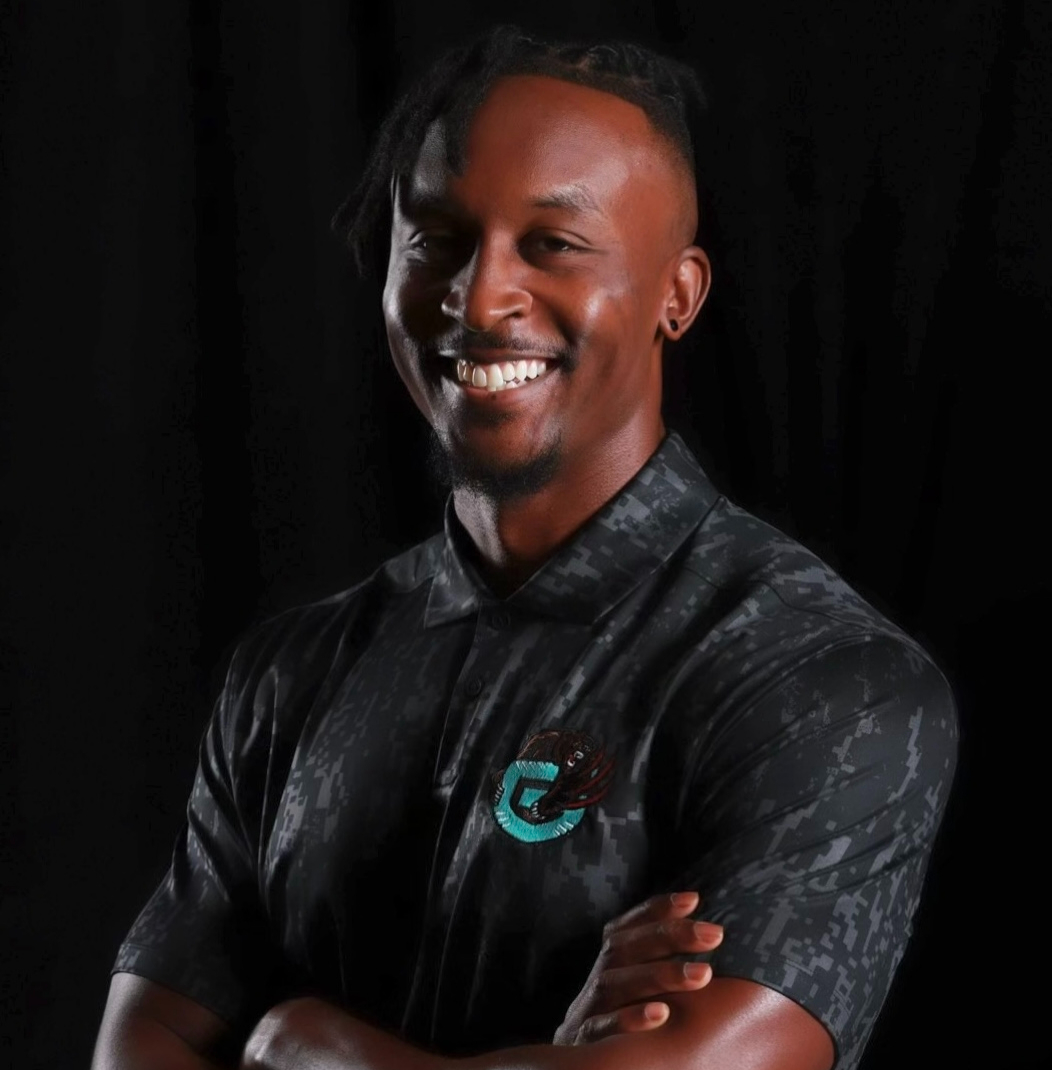
Jarred Boyd currently works for the NBA franchise Orlando Magic as a Physical Therapist. Prior to joining Orlando Magic, Jarred was the Director of Rehabilitation for the Memphis Grizzlies.
He holds a Doctor of Physical Therapy degree and combines this clinical training with applied experience in high-performance sport. His work draws on biomechanics, tissue adaptation, and neuromuscular assessment to address complex reconditioning problems


Comments