


NMES Recovery Technology Explained: How Peroneal Nerve Stimulation Supports Athlete Recovery

Updated: Jul 22

Recovery has become one of the most important aspects of modern athletic performance. Elite athletes, collegiate programs, sports medicine professionals, and active individuals all recognize that how you recover between training sessions can be just as important as how you train.
Today's recovery strategies extend far beyond the athletic training room. Athletes spend significant portions of their day sitting in meetings, classrooms, hotel rooms, buses, airports, and airplanes. Those periods of inactivity create opportunities to support recovery without adding another treatment session to an already busy schedule.
Firefly Recovery was developed with this reality in mind. Using a specialized form of neuromuscular electrical stimulation (NMES), Firefly stimulates the common peroneal nerve to activate the lower-leg muscle pump during periods of inactivity. The result is a wearable recovery solution designed to support circulation and sports recovery while fitting naturally into an athlete's daily routine.

Recovery Technology Has Evolved
Recovery is no longer limited to ice baths, compression boots, or treatment tables.
Athletes often move directly from practice to meals, meetings, travel, or hotel rooms before preparing for another workout or competition. Because these periods already exist in an athlete's schedule, sports medicine professionals increasingly seek recovery technologies that work during normal downtime.
Implementation has become just as important as innovation.
If a recovery intervention is difficult to use, requires extensive setup, or demands staff supervision every time it's used, athlete compliance typically declines. The best recovery technologies are often the ones athletes consistently use because they fit seamlessly into everyday life.
How Firefly's Recovery Technology Works
Firefly uses neuromuscular electrical stimulation to deliver a gentle electrical pulse to the common peroneal nerve.
Stimulating this nerve creates a light rhythmic foot movement, often described as a "foot flutter." That movement activates the muscles of the lower leg, producing rhythmic contractions that help maintain the natural muscle-pump action normally created during walking.
Rather than requiring an athlete to move continuously, Firefly supports circulation during periods when movement naturally decreases, such as while traveling, studying, working, or relaxing after training.
Walking is one of the body's most effective ways to keep the lower-leg muscle pump active. Firefly is designed to recreate that rhythmic activation during periods when walking simply isn't possible.
Why the Common Peroneal Nerve Matters
One of Firefly's biggest differentiators is where it delivers stimulation.
Traditional NMES systems typically place electrodes directly over individual muscles to create localized contractions used for strengthening, rehabilitation, or muscle re-education.
Firefly Recovery takes a different approach.
Instead of targeting individual muscles, Firefly stimulates the common peroneal nerve, creating a coordinated motor response that activates the lower-leg muscle pump through rhythmic foot movement.
This specialized nerve placement makes Firefly fundamentally different from traditional muscle stimulation devices. It also allows athletes to use the device comfortably during normal daily activities without interrupting work, travel, or recovery routines.
TENS vs. Traditional NMES vs. Firefly
Although all three technologies use electrical stimulation, they are designed to achieve very different outcomes. Understanding these differences helps practitioners select the right technology for the right objective.
Feature | TENS | Traditional NMES | Firefly |
Primary Purpose | Pain relief | Muscle strengthening and rehabilitation | Support circulation and sports recovery during periods of inactivity |
Primary Target | Sensory nerves | Individual muscles | Common peroneal nerve |
Muscle Contraction | Minimal or none | Direct contraction of selected muscles | Rhythmic activation of the lower-leg muscle pump |
Electrode Placement | Around the area of pain | Over the target muscle(s) | Over the common peroneal nerve |
Typical Use | Pain management | Rehabilitation and muscle re-education | Recovery between training sessions, travel, prolonged sitting, and between competitions |
While TENS is primarily intended for pain management and traditional NMES is designed to strengthen or rehabilitate specific muscles, Firefly represents a specialized application of NMES. By stimulating the common peroneal nerve, Firefly activates the lower-leg muscle pump to support circulation and sports recovery during periods of inactivity.
What the Research Shows
Neuromuscular electrical stimulation has been extensively studied within sports medicine and rehabilitation.
Research evaluating Firefly's approach has demonstrated increases in lower-limb blood flow, benefits to muscle performance, and reductions in post-exercise soreness.
These physiological responses are particularly relevant during periods of inactivity, when normal muscle-pump activity naturally decreases.
Like any recovery modality, Firefly is designed to complement foundational recovery strategies such as quality sleep, nutrition, hydration, and appropriately managed training loads rather than replace them.
Where Firefly Fits Into Athlete Recovery
One of Firefly's greatest strengths is that it works during situations athletes already experience every day.
Between Training Sessions
After practice, athletes often spend several hours eating, attending meetings, studying, or relaxing before their next workout. Firefly can be worn during the existing downtime without requiring an additional dedicated recovery session.

Between Games and Competitions
Tournament schedules and congested competition calendars rarely provide ideal recovery conditions. Teams often move between venues, buses, hotels, and locker rooms with limited time between events.
Because Firefly requires minimal setup and can be applied independently, it integrates naturally into these environments.
During Travel
Travel presents one of the biggest recovery challenges in modern sport.
Long flights and bus rides reduce opportunities for movement and often leave athletes feeling stiff or heavy-legged. Firefly allows athletes to support circulation while remaining comfortably seated, turning passive travel time into productive recovery time.
Who Uses Firefly Recovery?
Firefly has become part of recovery programs used by a wide range of performance professionals, including:
Athletic trainers
Physical therapists
Strength and conditioning coaches
Professional sports organizations
Collegiate athletic programs
Endurance athletes
Recreational athletes
Frequent business travelers
Because the device is lightweight, wire-free, and easy to apply, it scales efficiently from individual athletes to entire teams.
How Does Firefly Recovery Work?
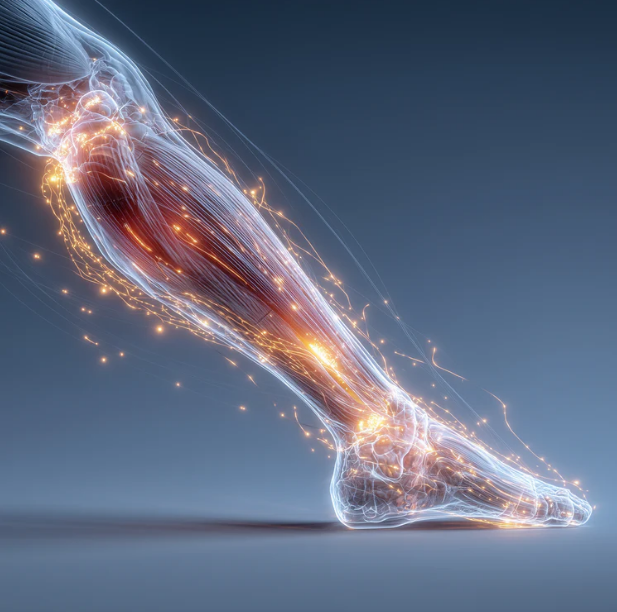
The mechanism is relatively simple:
Firefly is positioned just below the knee.
The electrical pulse reaches the peroneal nerve.
The foot moves rhythmically.
The calf muscles contract and relax repeatedly.
The lower-leg muscle pump remains active during inactivity.
The process occurs while the athlete continues with normal activities, without requiring a separate recovery session. Firefly Recovery is FDA-cleared as a Class II device and clinically proven to reduce soreness, accelerate recovery, and improve muscle performance.
Final Words
Recovery technology continues to move toward solutions that fit the realities of modern sport. Practitioners increasingly need interventions that are easy to implement, require minimal supervision, and work within the time athletes already have available.
Firefly's NMES approach reflects this shift. Using peroneal nerve stimulation to create repeated lower-leg muscle contractions during periods of inactivity offers a practical way to support circulatory recovery without adding unnecessary complexity to an athlete's routine.
---
Frequently Asked Questions
Q: How does peroneal nerve stimulation differ from traditional NMES or TENS?
The distinction lies primarily in where the stimulation is delivered and what physiological response it aims to produce. Traditional NMES places electrodes directly over individual muscles to generate localized contractions, typically for strengthening or rehabilitation purposes, while TENS targets sensory nerves for pain modulation with minimal muscular involvement. Peroneal nerve stimulation, as used in Firefly, instead targets the common peroneal nerve itself, producing a coordinated rhythmic foot movement that activates the lower-leg muscle pump rather than isolated muscle contraction. This nerve-level approach may explain why the technology is positioned around circulatory support during inactivity rather than muscle strengthening or pain relief.
Q: At what points in an athlete's schedule does this type of stimulation appear most relevant?
The technology seems best suited to periods when an athlete is seated or otherwise inactive but cannot easily move, such as during travel, between training sessions, or in the hours surrounding competition. These windows already exist within a typical schedule, so the stimulation can be layered onto them rather than requiring a separate recovery block. Long-haul travel and congested competition calendars are cited as contexts where reduced movement opportunities may leave athletes feeling stiff, which is where circulatory support of this kind is intended to help. The practical appeal, from a practitioner's standpoint, lies less in any single mechanism and more in how naturally the intervention fits into time that is otherwise unproductive for recovery.
Q: Does using a device like Firefly reduce the need for other recovery practices, such as sleep, nutrition, or active movement?
No, the technology is presented as a complement to foundational recovery strategies rather than a substitute for them. Sleep quality, nutrition, hydration, and appropriately managed training loads remain the elements most consistently associated with recovery outcomes in the broader literature, and peroneal nerve stimulation is framed as supporting circulation during inactivity rather than replacing these processes. A practitioner who treats it as a stand-in for movement or for sound programming would likely be overstating what the mechanism can offer. Its value may be better understood as filling a specific gap — supporting muscle-pump activity when walking isn't possible — within a broader recovery framework, rather than as a recovery strategy in its own right.
Q: How can this type of technology be integrated into a team's recovery protocol without adding logistical burden?Because the device requires limited setup and can reportedly be applied independently by the athlete, it tends to integrate into existing downtime rather than demanding a new supervised session. This matters from an implementation standpoint, since recovery interventions that require extensive staff oversight or complex setup often see declining compliance over time, regardless of their physiological merit. A lightweight, wire-free design also appears to support scalability, allowing a protocol developed for one athlete to extend to a full roster without a proportional increase in staff time. For practitioners evaluating new recovery technologies, this kind of low-friction implementation may be as relevant to long-term adoption as the underlying physiological mechanism itself.

Armando Rivas joined the Golden State Warriors as an Athletic Trainer in February 2025. He brings extensive experience in sports medicine, with prior NBA stops in Miami, Chicago, Minnesota, and Philadelphia. Before his NBA career, he served as Director of Sports Medicine and Head Athletic Trainer for the Los Angeles Galaxy and as Head Athletic Trainer for minor league affiliates of the Los Angeles Angels. He holds a Bachelor of Science in Athletic Training from Cal State Fullerton and a Master of Science in Exercise Physiology from Cal Poly Pomona. A California native, he resides in Rancho Mission Viejo.


Comments