


Current Trends in Sports Rehabilitation: Lessons from 38 Years in Major League Baseball
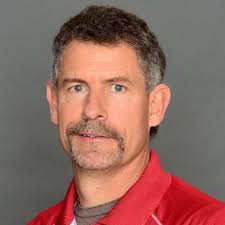
Sports rehabilitation and performance practice have changed considerably over the past decades, with new measurement technology, a different vocabulary and a larger number of professionals involved in the care of each athlete. This article presents the ideas I consider most useful from that period and the way they shape our work with players in professional baseball. I am the director of sports medicine and performance with the Arizona Diamondbacks, and I have spent 38 years in Major League Baseball. I started with the Pittsburgh Pirates as an athletic trainer, working in medical care and in strength and conditioning. I then worked with the Atlanta Braves, where we won a World Series in 1995, and with the Tampa Bay Rays, and I have now been with the Diamondbacks for 22 years. My title and my path have led me to look after performance, medical care, coaching and mental performance together, so I tend to look at problems through a broad lens.
I have been fortunate to work with some of the best players who ever played the game, including Tom Glavine, Greg Maddux and Randy Johnson, the last three pitchers to win 300 games in the major leagues. The material is oriented towards baseball, but I think the ideas can be applied in other sports. The one request I would make is the one that has helped me most in my career: to keep an open mind to seeing something different from what you currently think.
Changes in Language and Context
Ten to fifteen years ago, baseball became filled with analytics and new ways of measuring movement, both in the implements, such as the bat and the ball, and in the human body. A great deal of the language changed with it. When I started, a ball that spun a certain way had what we called late life, whereas today a TrackMan device measures the same behaviour as a number of revolutions per second. My own view is that old school and new school are largely the same, because the language has changed while what we are trying to understand has remained constant: human movement, how to maximise it, and how to prevent injury.
Several other developments have contributed. Workload management is now a prominent term, and an organisation needs to understand how it manages the workload of each player in the performance and strength and conditioning phase, in the recovery phase and in the game phase (Gabbett, 2016). At the youth level, club baseball has become a business in which organisations make money from tournaments, and younger athletes have more susceptible growth plates and training-age limitations (Olsen et al., 2006; Fleisig et al., 2011). I would be the first to say that there is not always a right or a wrong. The task is to step back and take an individualised look at each athlete, so that what that athlete can do is maximised.
Integration: The Athlete at the Center
The challenge I want to present is integration, meaning that everyone understands the role of everyone else on the team. In all my years I have learned that working in silos, in individual groups that do not integrate, leads to poor results. Our model places the player at the center. Around him sit skills coaches, analytics, medical staff, strength and conditioning, skills adaptation, mental skills and biomechanists, and beyond them are his family, the scout who brought him in, agents and outside coaches, all of whom have an impact on the player and need to work together towards what is best for him.

To build a structure of this kind, a few foundations need to be placed first. The first is a vision, a mission and values: what the group stands for, what its purpose is, and how it wants to show up as a team every day. From there comes commitment to doing what is best for the player. Expectations and communication have to be clearly defined, and when people feel responsible to each other and to not letting each other down, I think the team is very strong. All of this leads to connection, in which we serve the athlete, serve each other and challenge each other to be the best we can be. These elements have to be defined, reviewed and put into action, because the processes built on them will not be effective otherwise. On top of everything there has to be trust: trust in each other, trust in the systems, and trust that the group can adapt to keep moving forward.
Something I learned along the way is the Dunning-Kruger effect (Kruger and Dunning, 1999). When people first start climbing, they reach what is called the peak of Mount Stupid, where they do not yet understand how much there is to know. I did not know anything when I started, and it is one reason why I do not enter a conversation assuming that I am right and somebody else is wrong.
Movement Efficiency
In every exercise and in every skill there is an efficiency to look for, an efficient movement system that allows the athlete to reach the highest performance while keeping injury protection at the centre of it. In practice this means reducing torques around the joints. A Formula One pit stop in 1950 and one in 2013, when the changing of tires and refueling of the car was extremely fast, differ enormously in efficiency, and baseball has changed in much the same way.
Fifteen or twenty years ago a very average major league pitcher threw about 88 to 92 miles an hour, and now virtually every pitcher is at 95 to 100. This brings a lot more torque to the joints (Anz et al., 2010). Performance is much higher, so understanding the optimal biomechanical efficiency and load matters more than ever. If a player does not have adequate biomechanical movement, I do not want to put more load on it. Load comes in different forms: more repetitions, heavier implements, a body that is not moving well, and also the internal stressors, emotional and physiological, that do not recover.
Skills Adaptation: Shapes, Cues and Learning Style
I prefer the term skills adaptation to skills acquisition. Over the last five to ten years we have used drills that create better efficiency and sequencing of optimal movement, and this has changed a lot of baseball. Drills carry a cue and a feel, and the feel is what players look for when they reach the optimal movement.
I think about this in terms of shapes. I watch each joint for optimal movement from the ground up, from the ankles to the hand and the implement. Once the optimal shapes for a sport are learned, the movements should stay within that bandwidth, because outside it there is greater biomechanical torque on the joints, which limits performance and limits the reduction of forces around them (Aguinaldo and Chambers, 2009).
It is also necessary to understand how each player learns: visually, verbally or through feel. Players often learn from all three, but the coach has to know which works best. We have many Latin American players who learn visually. They learn less from verbal cueing, and if they are shown a picture or a video of themselves and then of what we are trying to get them to, they learn much faster.
Blending Drills in the Weight Room and on the Mound
In the weight room we use skills blending drills as activators and warm-ups that challenge the system before the skill itself. For hitters, who work with a great deal of rotation, we might take an aqua bag and learn to create force in the water at the end of the bag, so that the athlete learns to create force and then dissipate it. All of it is blended so that it transfers to the real skill.
With pitchers we teach them to load and to use the glute and the opposite abdominal wall to connect movement forward towards the plate. We then give the same feel with a ball in the hand, thrown against a wall. A regulation baseball weighs about 5 ounces, and we may give a heavier ball to link the arm to the torso, or a lighter one if arm speed is not enough. The aim is to give the pitcher a feel for the inside edge of the back foot, so that the right glute and the left abdominal wall are synchronised and the torso moves in the most efficient manner.

One pitcher we were struggling with was coming off surgery and still had some tightness in his arm motion. We blended drills together and placed him in more of an infielder-type position, to make him more athletic, moving his feet and getting his centre of mass moving towards the target. We start on flat ground or in the field and then carry the work to the mound, throwing downhill, which is closer to the real game. Our mound is a force plate, so we can measure the forces the pitcher puts in and show how he can move better. We use a constraints-led approach, adjusting implements, surfaces and tasks to each player according to how we see him move. Stability is what we are looking for, because most of the hardest throwers we have found have the most stable lower halves into the mound or the ground. We also use visual perception blending drills, whether players are hurt or not, with stability tasks that challenge the visual perception system so that more than one part of the cortex is challenged at once.
Velocity and Weighted Implements
Baseball has seen a large increase in velocity, and part of it is associated with throwing heavier weighted implements such as balls. We have seen a drastic increase in velocity over the years, but there is a price to pay in elbow stress (Anz et al., 2010). Mike Reinold published one of the few studies, and I think the take-home was that, depending on the weight of the ball, there is not a lot of difference in the valgus stress or angular velocity between the groups (Reinold et al., 2018). What we see anecdotally is that some movements in there probably put the player at a slightly higher risk. It is likely that glenohumeral external rotation increases, which generally helps a player throw harder but also increases the risk. I think more research is needed before we can say with confidence what is best, and we do use underweighted and overweighted balls only within a range not far from the 5 ounces that baseball players normally throw.

Strength Training and Sports Rehabilitation
I have always asked how much strength is enough, because there is more to performance than strength. There is power, there is efficiency and there is endurance. We have looked at many force plate measurements, and the players who can produce the most force on the plate do not necessarily throw the hardest or hit the farthest, although there is some correlation.
Strength training has pros and cons, and some things require care. Certain myofascial structures can be tightened in a way that inhibits the ability to throw the ball well. I always say to train greyhounds like greyhounds and bulldogs like bulldogs, a term I probably picked up from Dan Pfaff, the track coach in the US. The other piece is stability and sequencing, meaning how the athlete stabilises on the ground. We found that this helps reduce forces and also increases the capability of throwing hard or performing well (Aguinaldo and Chambers, 2009). In baseball, hitting and throwing, accuracy is as important as speed, and a lot of the time we pursue speed and forget to focus on accuracy.
A picture I use of several position players, with the number of home runs each hit that year beneath them, shows that body types differ and do not always match up with who performs best, so training needs to be specific. Upper body development in pitchers is at times somewhat detrimental, partly because tightness in the pectoral and latissimus area limits shoulder motion, so it needs to be carried out carefully and with specific knowledge of what is being done. I am not suggesting that it should be avoided, but that it should be done responsibly.
Exercise prescription needs to be very functional and to consider the positions required in the sport and the positions required in training. We also focus on end-range isometric strength, which helps range and gives stability in end-range positions, and I think all athletes should do it. We train players as much single leg as double leg, because in most of what they do they are performing the sport on a single leg. We take a sniper-like approach: first a better movement position, by activating specific chains of myofascial activity, then strength on top, then teaching the athlete to accept and generate force, then to do it quickly, and then to do it repeatedly.
Communication and Connection
Communication and connection allow the team to work efficiently and to take on the many new ideas that keep appearing, because it is necessary to work out what fits the system, the team and the people. How each person takes what is said is unique, so it is necessary to get to know the person. I also have a saying: just get off of being right. Communicating from a space of not needing to be right does not make everybody else wrong, and it allows one to see where the other person is and what their point of view might be.
Communication starts with listening well. A lot of the time we listen in order to talk, instead of listening to hear. That includes athletes, for whom the staff member has to be a listening ear, so that he understands what they are feeling and how they can help him help them. It is necessary to be precise and to be a very good listener, and these two things put the staff member on the side of the player and help him see the greatness that he cannot see in himself.
My take-home, and I think it is leadership in itself, is that if we can see the greatness in somebody else that they cannot see in themselves, and then inspire them to see it, we get a much broader connection and followership from our athletes and from the people we work with, and from there we can create the plan that makes the difference we want to see. We have to continue to grow, because the more we know, the less we find we know.
---
Frequently Asked Questions
Q: What does integration mean in a sports medicine and performance department, and how is it built?
Integration means that everyone on the team understands the role of everyone else, with the player at the center and with skills coaches, analytics, medical staff, strength and conditioning, mental skills and biomechanists working together around him. His family, the scout who brought him in, agents and outside coaches are also part of the picture. According to Crenshaw, the structure rests on a vision, mission and values, commitment, clearly defined expectations and communication, responsibility to one another and connection, with trust on top of all of these. These elements have to be discussed, reviewed and put into action, because processes built on them are less effective when they are only talked about.
Q: What are blending drills, and how are they used with pitchers?
Blending drills are weight room and field drills that are combined with the real skill, so that stability, force production and sequencing transfer to the game. With pitchers, the work includes teaching the athlete to load and to connect the glute with the opposite abdominal wall, and giving the same feel with a ball in the hand, sometimes heavier to link the arm to the torso or lighter if arm speed is lacking. The work starts on flat ground or in the field and is carried to the mound, where throwing downhill is closer to the real game. The mound is also a force plate, so the forces a pitcher produces can be measured and used to show how he can move better.
Q: Do weighted baseballs increase the risk of elbow injury?
The evidence is limited and still evolving. Velocity has increased considerably, and higher velocity is associated with greater elbow torque (Anz et al., 2010). One study of a weighted throwing programme found little difference in valgus stress or angular velocity between groups, depending on the weight of the ball (Reinold et al., 2018). Crenshaw notes that anecdotally some movements may carry a slightly higher risk, for example an increase in glenohumeral external rotation, and that more research is needed. His department uses underweighted and overweighted balls only within a range not far from the regulation 5 ounces.
Q: How should strength training be approached for baseball players?
Strength is only one component, alongside power, efficiency and endurance, and the players who produce the most force on a force plate do not necessarily throw the hardest or hit the farthest. Programmes need to be specific to the sport and its rotation, and to the individual athlete, in the sense of training greyhounds like greyhounds and bulldogs like bulldogs. Upper body development in pitchers can at times be somewhat detrimental, so it needs to be done responsibly. Crenshaw describes a sequence of better movement position first, then strength, then accepting and generating force, then doing it quickly, and then repeatedly, together with end-range isometric strength and as much single leg as double leg work.
Q: Why does communication receive so much emphasis in this approach?
Communication and connection allow a team to work efficiently and to take on new ideas, because each idea has to be fitted to the system, the team and the people. Context matters, and each person receives the same message differently, so the staff member needs to get to know the person. Listening in order to hear, rather than listening in order to talk, builds awareness of how a conversation will proceed, and this applies to athletes as much as to colleagues. Crenshaw also suggests communicating from a position of not needing to be right, which allows the other person's point of view to be seen.
References
Aguinaldo, A.L. and Chambers, H. (2009) 'Correlation of throwing mechanics with elbow valgus load in adult baseball pitchers', American Journal of Sports Medicine, 37(10), pp. 2043-2048. doi:10.1177/0363546509336721.
Anz, A.W., Bushnell, B.D., Griffin, L.P., Noonan, T.J., Torry, M.R. and Hawkins, R.J. (2010) 'Correlation of torque and elbow injury in professional baseball pitchers', American Journal of Sports Medicine, 38(7), pp. 1368-1374. doi:10.1177/0363546510363402.
Fleisig, G.S., Andrews, J.R., Cutter, G.R., Weber, A., Loftice, J., McMichael, C., Hassell, N. and Lyman, S. (2011) 'Risk of serious injury for young baseball pitchers: a 10-year prospective study', American Journal of Sports Medicine, 39(2), pp. 253-257. doi:10.1177/0363546510384224.
Gabbett, T.J. (2016) 'The training-injury prevention paradox: should athletes be training smarter and harder?', British Journal of Sports Medicine, 50(5), pp. 273-280. doi:10.1136/bjsports-2015-095788.
Kruger, J. and Dunning, D. (1999) 'Unskilled and unaware of it: how difficulties in recognizing one's own incompetence lead to inflated self-assessments', Journal of Personality and Social Psychology, 77(6), pp. 1121-1134. doi:10.1037/0022-3514.77.6.1121.
Olsen, S.J., Fleisig, G.S., Dun, S., Loftice, J. and Andrews, J.R. (2006) 'Risk factors for shoulder and elbow injuries in adolescent baseball pitchers', American Journal of Sports Medicine, 34(6), pp. 905-912. doi:10.1177/0363546505284188.
Reinold, M.M., Macrina, L.C., Fleisig, G.S., Aune, K. and Andrews, J.R. (2018) 'Effect of a 6-week weighted baseball throwing program on pitch velocity, pitching arm biomechanics, passive range of motion, and injury rates', Sports Health, 10(4), pp. 327-333. doi:10.1177/1941738118779909.

Ken Crenshaw is the Director of Sports Medicine and Performance for the Arizona Diamondbacks in MLB. Crenshaw was the head athletic trainer for the Tampa Bay Devil Rays from 2003 to 2005 and served as the assistant athletic trainer for the Rays from 1998-2002. Prior to joining Tampa Bay, Crenshaw worked for seven years as a professional athletic trainer, including four years as Minor League conditioning coordinator for the Atlanta Braves from 1992 to 1995.


Comments