


Isometric Training as a Tool for Dynamic Performance
Updated: 4 hours ago
Strength is a cornerstone of performance; it enables the execution of high-intensity athletic movements with both quality and consistency over time. It is also a critical factor in injury prevention, as a stronger muscle or kinetic chain provides greater stability and efficiency.
To develop or maintain this quality—especially during the competitive season for professional players—we often associate movement and specificity with concentric, eccentric, and plyometric methods.
In this context, isometrics are far too often undervalued. They are frequently pitted against "classic" methods due to a fear of straying too far from movement-specific training. However, this contraction mode offers a multitude of advantages.
The Benefits of Isometrics
In their literature review, Lum and Barbosa (2019) highlighted numerous studies validating the positive effects of isometric training:
Efficiency in Tight Schedules: In crowded calendars featuring domestic leagues, European cups, and national team selections, strength coaches seek efficient ways to "hit" muscular strength qualities. Isometrics allow for the production of high force levels comparable to traditional heavy lifting.
Technical Accessibility: With a simpler technical entry point than heavy dynamic movements, implementation is easier for beginners or athletes in a fatigued state (post-practice).
Neuromuscular Gains: Isometric work improves inter-muscular synchronization and coordination while allowing for strength development at specific joint angles.
Mind-Muscle Connection: These "static" high-force situations develop "body awareness" by requiring focus on a specific muscle or group without dynamic movement. This offers educational value, allowing the athlete to feel the muscle activate with full intent.
Types of Isometric Contraction: Yielding and Overcoming
Current research distinguishes between two types of isometric contractions (Schaefer and Bittman, 2017):

1) Yielding (HIMA - Holding Isometric Muscle Action): Consists of maintaining a joint position against body weight or an external load. It is typically used for longer durations at lower intensities. This method is prioritized during early rehabilitation or to build muscular endurance.

2) Overcoming (PIMA - Pushing Isometric Muscle Action): Involves a maximal (or near-maximal) push/pull against an immovable structure. This requires 80% to 100% "intent" and primarily targets neurological factors, allowing for high force production.
How I Use It
I have used isometrics as a tool for over twenty years, starting from my early days as a strength coach. More recently, I have implemented it at the highest levels of European basketball (Euroleague), global sports (Olympic Games), and professional soccer (Ligue 1, Europa League).
In the weight room, the protocols remain consistent:
Yielding sequences: With or without load, lasting between 20 and 45 seconds at various angles. The goal is to target all muscle lengths, even long-muscle lengths far from sport-specific positions.
Overcoming mode: Based on "percentage of intent" (where 100% is the maximal effort to move the load). An overcoming rep lasts 5 to 10 seconds, organized into sets.
Strength sessions are always organized weekly using a micro-dosing format. The goal is to maintain varied but constant strength stimuli every week, and even daily for certain players.
Target Profiles for Isometric Work
High-Minute Players: Maintenance and Chronic Pathology Management
Players with heavy playing time are often in a "battle" against chronic pathologies caused by match repetition and years of high-level play. Joint pain and tendinopathies are common. Isometrics are integrated into their pre-practice routine for targeted neuromuscular activation (limiting the joint stress of dynamic work) and for their analgesic effect on tendon pain (Rio et al., 2017). The focus here is prevention and "priming."

Post-practice sessions—especially after "high-load" days involving intense plyometric and mechanical stress—are centered around yielding isometrics. This maintains strength with less joint impact and greater effectiveness for tendon health.
Injured Players: A Rehabilitation Tool
In rehab, isometrics allow us to isolate muscles and avoid compensatory movements while still challenging strength. This creates a bridge toward dynamic work and a return to play. Additionally, isometrics easily adapt to injury constraints such as immobilization or localized muscle damage.
Young Players: A Pedagogical and Development Tool
Developing athletes are often beginners in the weight room. As mentioned, isometrics are an excellent educational tool for "mindful" strength work. Since heavy loading requires time to master technical form, isometrics allow for maximal recruitment in parallel with their dynamic movement education.
The "Stimulation" Session: Potentiation and Activation
These sessions occur close to game day (MD-1 or MD-0) for potentiation (PAP) and intense stimulation. Short overcoming isometric bouts (high intensity, nervous system focus) are highly effective. We target multi-joint movements close to sport-specific angles.
This "stimulation" concept also applies when we need to "wake up" a body facing mental or physical fatigue. A typical example is MD+2 (two days after a match), which is often also MD-1 or MD-2. The player is caught between recovery and the need to prime for the next game. We target all major muscle groups and motor functions (vertical push, hip extension, knee flexion, hip flexion) using 10-second overcoming holds at 80-90% maximal intent.

Evaluation: A Testing Tool
Isometrics allow for consistent athlete monitoring throughout the season. Using dynamometers, it is easy to track maximal force production, detect weaknesses, or monitor fatigue (performance drop) via longitudinal tracking.
We also use force plates paired with overcoming exercises to measure ground reaction forces. This provides isometric mid-thigh pull (IMTP) or squat data, ankle extension, or hip extension metrics. These tests are easily reproducible and integrate seamlessly into training. For example, a set of 6 reps of a 5-second overcoming squat on a force plate serves as both a development tool and an integrated test—maximizing time and efficiency.
Conclusion
Given the intense repetitive stress of competition, the wear and tear of chronic pathologies, and the increasing physical demands on young athletes, isometrics in all forms are essential for both development and durability. Far from being "static" in progress, isometric work is a powerful driver for transferring strength into sport-specific dynamic movements.
This article is part of the Omniathlete guide to isometric training in sport.
---
Frequently Asked Questions
Q: What is the difference between yielding and overcoming isometrics?
Yielding isometrics (HIMA) involve holding a position against bodyweight or an
external load for longer durations at lower intensities — prioritized in early
rehabilitation or for muscular endurance. Overcoming isometrics (PIMA) involve
pushing or pulling maximally against an immovable structure at 80–100% intent,
primarily targeting neurological adaptations and high force production.
Q: Why are isometrics particularly useful in professional football and basketball?
In crowded competitive calendars with domestic leagues, European cups, and national
team selections, isometrics allow for high force output comparable to traditional
heavy lifting with a simpler technical entry point and less joint stress. They can
be implemented post-practice or on match+2 days when dynamic loading must be
limited, making them an efficient tool for maintaining strength stimuli across a
demanding schedule.
Q: Can isometrics help with tendon pain in athletes?
Yes. Overcoming isometrics have demonstrated an analgesic effect on tendon pain
(Rio et al., 2017), making them particularly valuable for high-minute players
managing chronic tendinopathies. They are integrated into pre-practice routines
to provide targeted neuromuscular activation while limiting the joint stress
associated with dynamic exercises.
Q: How are isometrics used as a pre-match priming tool?
On MD-1 or MD-0, short overcoming isometric bouts at high intensity (80–90%
maximal intent, 10-second holds) targeting multi-joint movements at sport-specific
angles are used for post-activation potentiation (PAP) and CNS activation. The
goal is to prime the nervous system for high-force output without inducing
structural fatigue that would compromise match-day performance.
References
Lum, D. and Barbosa, T. M. (2019) 'Brief Review: Effects of Isometric Strength Training on Strength and Dynamic Performance', International Journal of Sports Medicine, 40(6), pp. 363-375.
Rio et al. (2017) 'Isometric Contractions Are More Analgesic Than Isotonic Contractions for Patellar Tendon Pain: An In-Season Randomized Clinical Trial', Clinical Journal of Sport Medicine, 27(3), pp. 253-259.
Schaefer, L. V. and Bittmann, F. N. (2017) 'Are there two forms of isometric muscle action? Results of the experimental study support a distinction between a holding and a pushing isometric muscle function', BMC Sports Science, Medicine & Rehabilitation, 11:9:11.

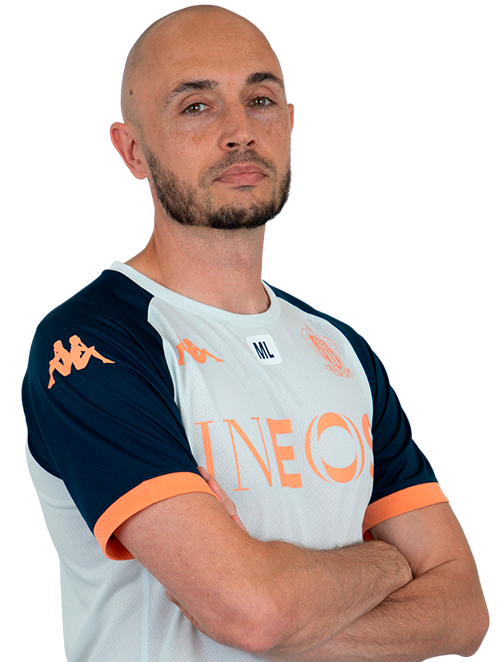
Currently a physical trainer for soccer team OGC Nice (France Ligue 1, Europa League), Manuel Lacroix has been a strength and conditioning coach since 2001, specializing in high-level and international sports. He has gained extensive experience across football, basketball, handball, and tennis. He was an Olympic medalist with the French national basketball team at the 2024 Olympic Games.


Comments