


Elastic Bands in Sport Performance Training: A Complete Guide to Mechanics, Applications and Alternatives

Over the last ten years elastic bands have become one of the most common tools in strength and conditioning. We see them in the weight room, in rehabilitation, in speed sessions, in warm-ups and jump training, and in almost every kind of team-sport preparation. It is not hard to see why. Bands are cheap, portable and quick to set up, and they make it possible to change resistance without any other equipment (Guzmán-Muñoz et al., 2026).
In practice, bands are often treated as just another form of resistance, much like adding plates to a barbell, loading a sled or selecting a weight on a cable machine. This overlooks the way elastic resistance actually behaves. Because band tension depends on stretch and no mass is added, a band changes the force–time profile of a movement, and the athlete may reorganise coordination and force production to solve the modified task. Depending on how far the movement is altered, the adaptation that follows may differ from the one intended, and this possibility is seldom considered when bands are prescribed. The same band can be used in a squat, a sprint, a jump or a lateral shuffle, and its mechanical effect is different in each case, so it is difficult to give a single verdict on bands. A more useful question is what the band does to the force–time characteristics and the coordination of a given movement, and whether that fits the adaptation we are trying to obtain.
The guide starts with the mechanics of elastic resistance, the way bands change force profile, coordination and adaptation, and the evidence comparing bands with conventional loading. It then covers barbell lifts, jumping, linear sprinting and lateral drills, and ends with a comparison with cable machines and motorized resistance devices and a framework for choosing among them according to the demands of the task.
How Elastic Bands Resistance Differs from Mass
A loaded barbell has a constant mass, and gravity acts on it in a predictable way. The load stays the same throughout the range of motion, even though the force needed to accelerate it changes. With a band, tension depends on how far it is stretched, so the resistance changes continuously during the movement and usually increases as the band lengthens. When this has been measured in the laboratory, the relationship between tension and stretch turned out to be curvilinear rather than linear, and bands of the same colour differed in resting length enough to produce tension differences of about 8 to 19% (McMaster, Cronin and McGuigan, 2010). Prescribing by colour alone is therefore not very precise. The tension actually experienced also depends on where the band is anchored, how much it is pre-stretched and whether it is looped or doubled, so the same band can give quite different loads in two set-ups.

A second difference concerns inertia. A band adds force but almost no mass. Unlike a free-weight load, it does not have to be accelerated at the start and it carries no momentum, so it cannot keep moving after the athlete stops pushing. Its tension instead rises towards the end of the range and slows the movement. For this reason, an exercise performed with bands may differ from a similar-looking free-weight exercise in its force requirements, muscle activation, coordination and joint loading, and the two may lead to different adaptations. The ascending profile can be an advantage when it matches the strength profile of the exercise, but it offers little when the band is used simply as a lighter, cheaper or more "functional" version of an external load.
What Bands Change in the Movement: Force Profile, Coordination and Adaptation
Because band tension depends on stretch, the external force acting on the athlete is a function of position and not a fixed quantity. At each instant of a movement, the force the athlete has to produce is the force needed to move the body and any implement, combined with the force needed to overcome or to complement the band. Adding a band therefore changes the force–time profile of the movement even when the displacement is the same. This has three consequences.
The first is on force production. When the band opposes the movement, the demand on the athlete is greatest where the band is most stretched, and when the band assists the movement, the demand is lowest at that point. In both cases the distribution of demand along the movement differs from that of the same movement without a band, and also from that of a mass of similar magnitude, which would add inertia and a constant gravitational component. Since muscle force depends on joint angle and on contraction velocity, a different distribution of external force implies a different distribution of muscular demand across joint angles and velocities.
The second is on coordination. Movement emerges from the interaction between the athlete, the task and the environment, and a band is an additional element of the environment whose force changes with position. The nervous system usually adjusts timing, joint sequencing, posture and the use of the stretch–shortening cycle so that the task can be completed under the new conditions. These adjustments are a normal response and do not indicate a fault in the athlete, but they mean that the movement performed with a band is similar to the unbanded movement without being identical to it.
The third is on adaptation. Training adaptations tend to be specific to the conditions in which the stimulus is applied, including the joint angles, velocities and force–time characteristics involved. If the coordination and force profile practised with bands differ from those of the sport action, part of the adaptation may be specific to the banded condition, and its transfer to the unassisted action cannot be assumed. The term negative adaptation is used here for this possibility, that is, an adaptation in a direction different from the intended one, and it does not refer to injury or dysfunction. The size of the effect probably depends on how much the band alters the task. A band supplying a small proportion of the load in a squat changes the task little, while a band that assists or resists a jump, a sprint or a lateral push changes it considerably more.
The mechanical reasoning has some direct support, for example in the load-specific changes in jumping technique described later (Markovic et al., 2013), but for most band applications it has not been tested directly, so it should be read as a reasoned hypothesis. The evidence reviewed in the next section shows that bands can improve performance outcomes. These two points do not contradict each other: an improvement in jump height or sprint time shows that something has been gained, but not which movement strategy was trained. Each application below is therefore described first in terms of what the band does to the movement, and then in terms of the available evidence.
"The distribution of demand along the movement differs from that of the same movement without a band, and also from that of a mass of similar magnitude, which would add inertia and a constant gravitational component. Since muscle force depends on joint angle and on contraction velocity, a different distribution of external force implies a different distribution of muscular demand across joint angles and velocities."
What the Evidence Says About Bands as a Training Tool
Before looking at specific applications, it helps to see how bands perform as a general resistance method. A meta-analysis comparing elastic and isoinertial exercises found no significant differences in the electromyographic activity of prime movers, antagonists, synergists or stabilisers, and the authors concluded that elastic resistance can activate muscle to a similar extent when the external resistance is comparable (Aboodarda, Page and Behm, 2016). Training outcomes point in the same direction. A pooled analysis of eight trials comparing elastic devices with conventional equipment, including weight machines and dumbbells, found no clear difference in upper or lower limb strength gains (Lopes et al., 2019). These analyses combined different exercises and protocols, and the condition of comparable external resistance is not trivial to meet when band tension varies as described above.
In athletes, a recent meta-analysis of 21 studies and 729 team-sport athletes reported large pooled effects of elastic band training on lower-limb explosive power (standardised mean difference 1.43), change-of-direction performance (−2.54, where the negative sign indicates shorter times) and sprint performance (−1.64) (Stanković et al., 2025). The authors point out that control groups performed only routine team training, so the results describe the benefit of adding band work to existing programmes and do not establish superiority over other forms of resistance training. They also report substantial heterogeneity, interventions of only 5 to 10 weeks, and wide variation in band specifications between studies. A systematic review in athletes reached a similar conclusion, with band training showing positive chronic effects on sprinting and jumping and a limited amount of high-quality evidence behind them (Sousa et al., 2025).
Overall, these findings suggest that bands can contribute to performance, and the question becomes how they are applied. The outcomes measured in these studies are strength, jump height, sprint time and muscle activation, and none of them shows by itself whether the coordination or the force production strategy used with the band matches that of the unbanded movement. Similar activation and strength gains in general comparisons therefore do not guarantee that a band exercise reproduces the demands of a particular sport action, as the following sections discuss.
Accommodating Resistance in Barbell Exercises
The use of bands that is easiest to justify is accommodating resistance in traditional strength and power exercises. In many barbell lifts, leverage changes through the range of motion. In the squat and the bench press, for example, athletes are usually weakest near the bottom and get stronger as they approach lockout. With a constant load, the weight that can be lifted is limited by the weakest position, so the stronger part of the range may be underloaded. Bands anchored to the floor add little tension at the bottom and more towards the top, which brings the load closer to what the athlete can produce at each point of the lift.

The training data are reasonably supportive. A meta-analysis of fourteen studies found that variable resistance training improved maximum strength more than constant resistance training, both in trained and in untrained participants. In trained participants the advantage appeared when the variable resistance load was at least 80% of one-repetition maximum, but not with lighter loads (Lin et al., 2022). In the short term, adding band tension to a heavy back squat has been shown to increase peak force and peak power compared with free weights alone, mainly at the heavier of the two loads tested (Wallace, Winchester and McGuigan, 2006).
Bands may also help with the deceleration phase. In non-ballistic lifts the athlete has to reduce force towards the end of the concentric phase in order to keep control of the bar, and with lighter loads this deceleration can take up a large part of the movement (Newton et al., 1996). Since band tension increases towards lockout, bands may allow force production to continue later into the concentric phase and support the intention to accelerate through the whole lift. Bands also pull the bar down during the eccentric phase, which can increase lowering speed and the braking demand at the transition. This can be useful, as long as it is intended.
Whether these advantages are realised seems to depend on how much of the total load the bands supply and on how they are combined with the bar. In a study of eleven collegiate athletes, replacing roughly 10% of the squat load with elastic bands or chains produced no differences in electromyographic activity or ground reaction forces compared with a conventional squat (Ebben and Jensen, 2002). When the band force was equal to 20% of a load of 55% of one-repetition maximum, peak eccentric velocity and the rate of force development in the concentric phase were greater with bands, whereas peak and mean concentric velocity were greater without them (Stevenson et al., 2010). In recreationally trained women performing six-repetition maximum squats, total resistance with bands was close to the constant condition before the sticking region (98%) and higher in the sticking (105%) and post-sticking regions (113%). Barbell velocity was 21.0% higher before the sticking region and 22.8% lower after it, with no significant differences in muscle activity, and the authors suggested using a larger proportion of band resistance or chains (Saeterbakken, Andersen and van den Tillaar, 2016). Small proportions of band tension may therefore alter kinematics without measurably changing muscle activation, and the extra resistance near lockout may need to be larger than is commonly used if the stronger part of the range is to be challenged.
The deadlift adds a further consideration. When the bar load was reduced as band tension was added, with 15 resistance-trained men lifting either a 100 kg bar or a bar of 70 to 80 kg together with 20 to 30 kg of band tension, bar velocity and power increased while the activation of posterior chain muscles declined as band tension rose (Heelas, Theis and Hughes, 2021). A plausible explanation is that the lighter bar lowers the demand in the first part of the lift, where the bar carries most of the load. The proportion of total load supplied by the bands may therefore influence the stimulus as much as the presence of bands.
Band-Assisted and Band-Resisted Jumping
Band-assisted jumping rests on a simple idea: if the bands take some of the athlete's body weight, the athlete can jump higher and move faster, which might give a greater velocity stimulus. Some studies support this. In elite junior volleyball players, five weeks of countermovement jumps with about 10 kg of bungee assistance improved countermovement and spike jump height more than the same volume of unassisted jumps (Sheppard et al., 2011). In professional rugby players, four weeks of assisted jump training led to small improvements in jump height compared with free jumping, and assisted jumps showed the highest peak velocity and relative peak power of the jump types tested (Argus et al., 2011).
In an unassisted countermovement jump, ground reaction force is usually highest around the change from braking to propulsion, and it decreases as the centre of mass rises towards take-off. When bands are anchored above the athlete, they are most stretched at the bottom of the countermovement, so they assist most where ground force would normally be highest and less and less as the athlete rises. The force–time curve changes shape and is not simply scaled down. When bands are anchored to the floor to resist the jump, the opposite happens and resistance increases towards take-off. In both cases the athlete faces a somewhat different movement problem from that of a normal jump. Assistance also lowers the ground reaction force needed to accelerate the centre of mass, because the band supports part of the body weight, so the same jump height can be reached with less muscular force and over a different time course.

There is some experimental evidence for this. In a study where physically active men trained for eight weeks with assistance, with added resistance or with no external load, jump height improved by a similar amount in all groups. The assisted group, however, developed a much deeper countermovement, a longer jump, and lower ground reaction forces and power output than the other groups (Markovic et al., 2013). The authors suggested that these load-specific changes in jumping technique may separate improvements in jump height from improvements in muscle power. Together with the studies above, this suggests that a gain in jump height after assisted training can occur with a different movement strategy, and that jump height alone does not show which strategy was trained. The question is therefore which strategy is being reinforced and whether it carries over to unassisted jumping in the sport, as well as whether the athlete jumps higher with assistance.
Bands in Linear Sprinting and Acceleration
Linear sprinting is another area where bands are used, either as resistance, with the band pulling the athlete backwards during acceleration, or as assistance, with the band pulling the athlete forwards to promote higher running speeds. In both configurations tension depends on stretch, so the load changes with the position of the athlete along the sprint distance.
In a resisted set-up the band is stretched further as the athlete advances, so resistance rises while running speed increases. During maximal acceleration, the ability to apply horizontal force declines as velocity rises, which means that a band whose tension grows with distance loads the later part of the acceleration more heavily than the first steps. A sled or a constant horizontal load produces a different pattern, with the highest relative demand early in the sprint, when the athlete is slow. The two methods may therefore train different parts of the acceleration phase, and the choice between them can be made on that basis.
The evidence on elastic resisted sprinting is limited but suggestive. In elite young soccer players, seven U19 athletes performed ten sessions of repeated sprints against progressive elastic resistance over eight weeks, while eight U17 players from the same academy followed the same sprint protocol without bands. Sprint time over 30 m improved by 2.1% and maximal velocity by 3.9% in the elastic group, with no change in the control group, whereas theoretical maximal horizontal force was unchanged in both. The authors interpreted the results as an improvement in the ability to produce horizontal force at higher velocity, towards the final phase of acceleration (Le Scouarnec et al., 2022). The small sample and the different age categories of the two groups limit how far this conclusion can be extended.
Assisted, or overspeed, sprinting works in the opposite direction. In many set-ups the band recoils as the athlete advances, so the assisting force is greatest at the start, when running speed is lowest, and declines as speed rises. A systematic review of 16 studies on towing systems reported acute increases in maximal running speed (effect size 1.54), stride length and flight time, a small increase in stride rate and a decrease in ground contact time (effect size 0.57). The ground reaction force and electromyographic data were not consistent enough to show whether these changes reflect a greater muscular response by the athlete or the effect of the towing system itself (Cecilia-Gallego et al., 2022). In 15 athletes sprinting with elastic tubing at three stretch lengths, contact time was 8.3 to 10.4% shorter and velocity 3.7% higher in some conditions, with no differences in horizontal or vertical ground reaction forces, and the longer tube conditions were more favourable in most cases (Frisk et al., 2022).
From a mechanical point of view, a force acting in the running direction reduces the horizontal impulse that the athlete has to generate in each ground contact for a given acceleration, and a force acting against it increases that impulse. Both alter the timing of the contact and the relationship between horizontal and vertical force, and the angle of the pull, which depends on the height of the anchor and of the attachment point, adds a vertical component that changes the effective body weight. Sprint technique under assistance or resistance may therefore differ from unloaded technique, in line with the changes in contact time and stride characteristics reported above. Whether these differences are beneficial, neutral or unfavourable for unassisted sprinting has not been established.
The magnitude of the assisting force also matters. In ten track and field athletes, changes in stride length and in the velocity of the centre of mass appeared with towing forces of 3.8% and 4.7% of body weight, and the authors suggested adjusting towing force for each athlete and avoiding forces above 3.8% of body weight (Clark et al., 2009). Keeping the assisting force within a range of a few per cent of body weight is difficult with bands, since tension varies with stretch and between bands of the same nominal strength. This is a practical limit of elastic assistance, and one that devices with a directly set force avoid, as discussed in the section on motorized resistance.
Bands in Lateral and Multidirectional Drills
Bands are also widely used in lateral and multidirectional drills, such as lateral shuffles, defensive slides, change-of-direction drills and reactive exercises. The reasons given for these drills are often quite general, such as developing lateral power, sport-specific strength or activation, and they rarely take into account what the band itself does to the movement.
Lateral movement depends largely on how the athlete interacts with the ground. It requires well-oriented mediolateral ground reaction forces, control of the centre of mass in relation to the base of support, and quick repositioning of the feet, all within very short time windows (Clarke et al., 2018). The aim is to organise force effectively, which is different from producing as much effort as possible.
When a band is attached to the athlete during a shuffle or a lateral acceleration drill, the athlete has to respond to the band as well as to the ground. Resistance increases with distance from the anchor point, the direction of the pull changes with body position, tension varies throughout the movement, and the oscillation of the band adds small perturbations. The athlete ends up working in a constantly changing environment that is quite different from the one met in a game. A defender following an opponent is not pulled back by a force that keeps increasing during the shuffle, and a player changing direction does not reaccelerate against a growing elastic load. The exercise is not necessarily useless, but claims about its specificity are harder to support.
Systematic reviews do report improvements in sprint, jump and change-of-direction performance after elastic band training programmes in athletes (Sousa et al., 2025; Stanković et al., 2025). It is not always clear from these studies whether the band was attached to the athlete during the movement itself or used as strength or plyometric loading around it. Band-based training can therefore contribute to multidirectional performance, and this does not conflict with the points above. What remains uncertain is whether attaching a band to the athlete during the lateral task reproduces the mechanical demands of that task, and whether the drill is chosen for that reason or for another.
Effort, Transfer and Appropriate Uses of Bands
As described earlier, the solution learned with assistance or resistance from a band may differ from the one needed in competition, for example in the timing of force application, the sequencing of the joints, ground contact characteristics, the use of the stretch–shortening cycle, trunk position and limb coordination. Occasional band work is not necessarily harmful, and the studies above show that it can be productive. A higher assisted jump or a faster assisted sprint is not, however, proof of effective training on its own, and adaptation is better judged by the performance and movement quality of the unassisted target action than by performance within the band condition.
Athletes may become good at producing force under the conditions created by the band rather than under the conditions of their sport, and this is one way in which an adaptation different from the intended one could arise. Feedback can also be misleading, because higher jumps and faster movements feel like progress even when it is unclear which qualities are actually improving.
It is often assumed that adding resistance improves transfer. Band-resisted shuffles look demanding: athletes work hard, heart rate goes up and the effort is clearly visible. Transfer, however, depends on whether the training improves a capacity that the sport actually requires. If the band increases co-contraction, slows the movement, changes posture, lengthens ground contacts and alters the direction of force, the athlete may mostly be learning to deal with the band. These effects have not been studied systematically in band-resisted lateral drills, so they should be considered plausible hypotheses rather than established findings.
There are situations in which this kind of work is useful. Bands can perturb the athlete and challenge postural control, expose athletes to unfamiliar force conditions that require new movement solutions, or serve as a low-cost option when other equipment is not available. These goals differ from improving lateral speed or movement efficiency, so it is useful to state which one the drill is meant to serve.
"When a band is attached to the athlete during a shuffle or a lateral acceleration drill, the athlete has to respond to the band as well as to the ground. Resistance increases with distance from the anchor point, the direction of the pull changes with body position, tension varies throughout the movement, and the oscillation of the band adds small perturbations. The athlete ends up working in a constantly changing environment that is quite different from the one met in a game."
Bands Compared with Cable Machines
In a cable machine, resistance comes from a weight stack connected to the handle through one or more pulleys. The tension in the cable is set by the selected load and the pulley arrangement, and it does not depend on how far the handle has travelled. A band behaves differently, because its tension is defined by stretch. For a given exercise, the torque a cable produces at a joint depends on the direction of the cable relative to that joint, which determines the moment arm. The resistance profile of a cable exercise is therefore a function of body position and cable geometry, and changing the height of the pulley or the position of the athlete alters the profile without changing the load.
This has two practical consequences. A cable can be oriented in any direction, including horizontally or laterally, with a force that stays the same through the movement. A band can also be oriented in different directions, but its tension rises with stretch. This matters in the horizontal and lateral tasks discussed earlier, where a constant directional force may represent the mechanical demand more faithfully than one that increases with displacement. The second consequence is that the load is known. A selectorized stack provides a defined mass, whereas band tension varies with stretch and by 8 to 19% between bands that are nominally the same (McMaster, Cronin and McGuigan, 2010), which makes progression and comparison between sessions easier with a stack.
A weight stack nevertheless has mass, and its inertia contributes to the force at the handle. Tension rises when the stack is accelerated and falls when it decelerates, so fast movements produce a force peak at the start and reduced tension towards the end that depend on movement speed and on the pulley ratio. Cable machines therefore share the limitations of mass-based loading when velocity-specific adaptations are the aim, a limitation described for free weights in general (Frost, Cronin and Newton, 2010).
Direct comparisons between bands and cable stacks at matched resistance were scarce in the literature reviewed for this guide. The closest evidence is the comparison of elastic and conventional resistance, which found similar activation and similar strength gains when the external resistance is comparable (Aboodarda, Page and Behm, 2016; Lopes et al., 2019). These findings suggest that, for general strength development in non-ballistic exercises, both can provide an adequate stimulus, and the choice rests on practical aspects such as portability, quantification and the direction of resistance. In exercises where the demand changes through the range, such as lifts with a pronounced sticking region, the ascending profile of a band may match the strength curve, whereas a cable keeps the same tension and leaves the torque profile to the moment arm.
Bands Compared with Motorized Resistance
Motorized resistance devices use an electric motor, typically a servo motor under software control, to generate the force that opposes or assists the movement. Because force is a controlled variable, it can be defined as a function of position, time or velocity, and it can differ between shortening and lengthening phases. The best-studied example in sprinting is a motorized device that attaches to the athlete's waist through a tether. In its normal mass mode it simulates the inertial properties of a mass in gravity, comparable to a cable-driven weight stack (Sugisaki et al., 2023), and it can also be programmed to assist the athlete. The capabilities depend on the particular device, and a feature listed in manufacturer documentation does not in itself demonstrate training effectiveness.
The first advantage over bands lies in quantification. Band tension can only be estimated approximately from colour and stretch, whereas a motorized device sets the force and records it together with velocity. Sprint times from one such device agreed with a reference timing system within ±0.01 s over most of the distance in 17 elite female handball players, with a systematic offset of about 0.34 s in the first 5 m attributable to different triggering positions, and intraclass correlations ranged from 0.86 to 0.95 (Rakovic et al., 2022). Reliability has also been examined for assisted sprint outcomes, and the authors note that assisted sprinting is less widely used than resisted sprinting, probably because assistance is difficult to individualise and the response is difficult to quantify (Eriksrud and Westheim, 2025). A device that sets and records the towing force can address both problems, which is relevant to the difficulties with elastic assistance described above.
A second advantage concerns load prescription. In nine sprinters running with a motorized device at loads of 4 to 12 kg, differences in ground reaction force variables between loads were small, around 4%, when compared at the same running velocity. The authors suggested that the variable relevant for prescription is the velocity loss caused by the load, and that the relationship between absolute load and running velocity differs between individuals and should be examined for each athlete. They also observed that, close to the maximal velocity reached under each load, force application became more vertical and flight time longer, and they recommended care in choosing the sprint distance when loads are heavy (Sugisaki et al., 2023). Prescribing by velocity loss requires a device that applies a defined force and measures velocity, which a band does not do.
Eccentric loading is a third area. A motorized system can in principle apply a higher load during lengthening than during shortening, whereas a weight stack provides the same load in both directions. The evidence for training with eccentric overload comes mainly from flywheel devices, which are inertial and not motorized. A meta-analysis of nine studies and 276 participants reported greater improvements with flywheel eccentric overload than with traditional weight-stack training in concentric and eccentric strength, power, muscle hypertrophy, vertical jump height and running speed (Maroto-Izquierdo et al., 2017). These results show the potential of eccentric overload. Whether motorized strength machines produce the same effects has received little attention in the literature reviewed for this guide, and the flywheel results should not be transferred to them automatically.
Cost, space and the need for software support are typically greater with motorized devices than with bands, which keep clear advantages in portability, price and ease of use. For many practitioners the decision is partly a matter of resources, and it helps to establish which of the advantages above are actually needed for the objective.
Choosing the Resistance for the Task
These resistance types differ along a small number of mechanical dimensions, and the choice is easier when it starts from the demands of the task. The first dimension is how resistance varies with position: it rises with stretch in bands, remains constant in magnitude with a cable stack, and can be programmed with a motor. The second is inertia, which is absent with bands, present with a stack and adjustable or simulated in motorized devices. The third is quantification, approximate with bands, defined with a stack and measured with motorized devices. The fourth is practicality: bands are inexpensive and portable, stacks require a machine, and motorized devices usually require both investment and infrastructure.
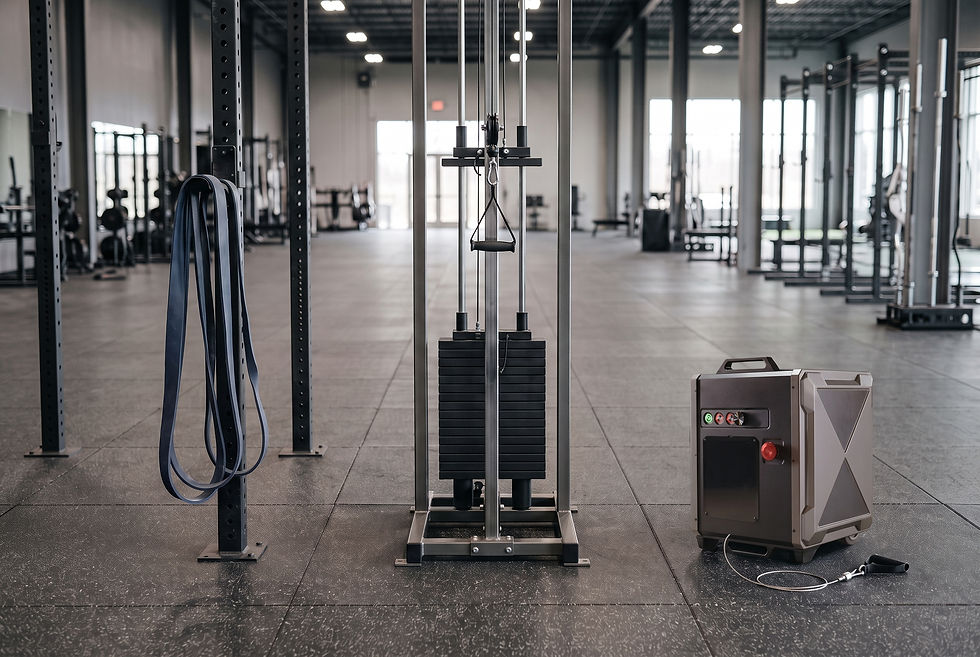
Applying these dimensions to the tasks discussed in this guide, accommodating resistance in barbell exercises is the use for which an ascending profile has the clearest rationale, provided the proportion of band tension is high enough to change the load in the stronger part of the range and the bar load is not reduced so much that the first part of the lift becomes undertrained. Jumping with assistance or resistance may be considered when the aim is to expose athletes to a particular velocity or force condition, in addition to unassisted jumping and not in place of it. In linear sprinting, elastic resistance and assistance appear to produce measurable effects, although the load is difficult to quantify and individualise with bands and easier to control with motorized devices, which also allow loads to be prescribed from velocity loss. In lateral and multidirectional work, a constant directional force from a cable or a motorized device may represent the mechanical demand more faithfully than a band, and bands may be better used for perturbation, activation or movement variability. Eccentric emphasis, individualised loading and objective monitoring point towards motorized systems where these are available, while portability, cost and simplicity favour bands.
Many practitioners use several of these tools, and combining them is reasonable when the purpose of each is clear. For example, a band for perturbation, a cable for a controlled lateral load and a motorized device for resisted accelerations can be part of the same programme.
Conclusion
Elastic bands are among the most accessible and versatile tools in performance training, and their mechanical behaviour often receives little attention. Tension rises with stretch, no mass is added, and the load experienced depends on the band, the anchor and the position of the athlete. These properties change the force–time profile of a movement and may lead the athlete to reorganise coordination and force production, so that the adaptation obtained can be specific to the banded condition and differ from the one intended. The extent of this effect appears to depend on how far the band alters the task, and for most applications it has not been tested directly.
At the same time, general comparisons show activation and strength gains similar to those of conventional resistance when the external resistance is comparable, and the evidence in athletes is positive, though limited by heterogeneity and by the way bands are specified.
The clearest value of bands appears to lie in modifying the resistance profile of traditional strength and power exercises, provided the proportion of band tension is large enough to change the stimulus. In jumping and linear sprinting, bands can produce measurable effects while altering the force–time characteristics and the coordination of the movement, and the load is hard to quantify. In lateral drills a band may change the task itself. Cable machines offer a known load with constant magnitude and a direction that can be chosen freely, and motorized devices add programmable force, measurement and the possibility of prescribing from velocity loss. When choosing a tool, it is useful to ask whether the resistance preserves, enhances or changes the qualities the programme is meant to develop, and the effect of the programme is best judged by the performance of the unassisted target action.
---
Frequently Asked Questions
Q: Can band training produce adaptations that do not transfer to the sport action?
This is possible, and it probably depends on how much the band alters the movement. Because tension changes with stretch and no mass is added, a band changes the force–time profile and may lead the athlete to reorganise coordination, so part of the adaptation may be specific to the banded condition. Direct evidence is limited. In one study, assisted jump training produced a gain in jump height similar to that of the other groups, but with a deeper countermovement and lower ground reaction forces and power (Markovic et al., 2013), whereas for most applications the effect on coordination has not been tested directly. A small proportion of band tension in a barbell lift changes the task little, and bands that assist or resist jumps, sprints or lateral drills change it more. Judging a programme by the unassisted performance and movement quality of the target action helps to detect any divergence.
Q: When do bands add value to barbell exercises, and how much tension should be used?
The rationale is strongest in lifts with an ascending strength curve, such as the squat and the bench press. Variable resistance improved maximum strength more than constant resistance in a meta-analysis, and in trained participants the advantage appeared when the variable resistance load was at least 80% of one-repetition maximum (Lin et al., 2022). Studies in which bands supplied roughly 10 to 20% of the load found small changes in kinematics and little change in muscle activation (Ebben and Jensen, 2002; Stevenson et al., 2010; Saeterbakken, Andersen and van den Tillaar, 2016). Optimal proportions have not been established, and measuring band tension at the working length helps to individualise the load.
Q: Are band-resisted and band-assisted sprints effective?
The evidence is limited. A small study in elite young soccer players found improvements in sprint time and maximal velocity after eight weeks of repeated sprints against progressive elastic resistance (Le Scouarnec et al., 2022), and a review of towing systems reported acute increases in running speed and decreases in ground contact time (Cecilia-Gallego et al., 2022). The magnitude of assistance appears to matter, with changes in stride length reported at towing forces of 3.8% of body weight and above (Clark et al., 2009). Because band tension is hard to quantify and varies with stretch, the load is difficult to individualise with bands.
Q: How do cable machines and motorized devices differ from bands?
In a band, tension rises with stretch and no mass is added. A cable stack applies a tension of constant magnitude in a direction set by the pulley, and its mass adds inertia. A motorized device sets and records force and velocity, and it can be programmed to assist, to resist or to simulate mass. Motorized sprint devices have been tested for validity and reliability (Rakovic et al., 2022; Eriksrud and Westheim, 2025), whereas evidence on training outcomes with motorized strength machines was limited in the literature reviewed. Bands retain advantages in cost and portability.
Q: Can bands improve lateral movement?
Band-based training programmes have been associated with improvements in change-of-direction performance in team-sport athletes (Stanković et al., 2025), although the studies differ in how the bands were used. Attaching a band to the athlete during a lateral drill changes the mechanical task, since resistance rises with distance and its direction changes with body position, and these effects have not been studied systematically. Bands may be more suitable for perturbation, activation or movement variability. When a constant lateral force is required, a cable or a motorized device may reproduce the demand more closely.
References
Aboodarda, S.J., Page, P.A. and Behm, D.G. (2016) 'Muscle activation comparisons between elastic and isoinertial resistance: a meta-analysis', Clinical Biomechanics, 39, pp. 52–61. doi:10.1016/j.clinbiomech.2016.09.008.
Argus, C.K., Gill, N.D., Keogh, J.W.L., Blazevich, A.J. and Hopkins, W.G. (2011) 'Kinetic and training comparisons between assisted, resisted, and free countermovement jumps', Journal of Strength and Conditioning Research, 25(8), pp. 2219–2227. doi:10.1519/JSC.0b013e3181f6b0f4.
Cecilia-Gallego, P., Odriozola, A., Beltran-Garrido, J.V. and Álvarez-Herms, J. (2022) 'Acute effects of overspeed stimuli with towing system on athletic sprint performance: a systematic review with meta-analysis', Journal of Sports Sciences, 40(6), pp. 704–716. doi:10.1080/02640414.2021.2015165.
Clark, D.A., Sabick, M.B., Pfeiffer, R.P., Kuhlman, S.M., Knigge, N.A. and Shea, K.G. (2009) 'Influence of towing force magnitude on the kinematics of supramaximal sprinting', Journal of Strength and Conditioning Research, 23(4), pp. 1162–1168. doi:10.1519/JSC.0b013e318194df84.
Clarke, R., Aspe, R., Sargent, D., Hughes, J. and Mundy, P. (2018) 'Technical models for change of direction: biomechanical principles', Professional Strength and Conditioning, 50, pp. 17–23.
Ebben, W.P. and Jensen, R.L. (2002) 'Electromyographic and kinetic analysis of traditional, chain, and elastic band squats', Journal of Strength and Conditioning Research, 16(4), pp. 547–550.
Eriksrud, O. and Westheim, F. (2025) 'Test-retest and intrasession reliability of assisted sprint outcome measurements using a motorized resistance device', Frontiers in Sports and Active Living, 7, 1592707. doi:10.3389/fspor.2025.1592707.
Frisk, H.L., Gold, M.E., Biggs, B.R. and Ebben, W.P. (2022) 'Kinetic, spatial, and temporal assessment of overspeed towing with elastic tubing', ISBS Proceedings Archive, 40(1), Article 50.
Frost, D.M., Cronin, J. and Newton, R.U. (2010) 'A biomechanical evaluation of resistance: fundamental concepts for training and sports performance', Sports Medicine, 40(4), pp. 303–326. doi:10.2165/11319420-000000000-00000.
Guzmán-Muñoz, E., Garcia-Carrillo, E., Castillo-Paredes, A., Montalva-Valenzuela, F., Molina-Márquez, I., Narrea Vargas, J.J., Villaseca-Vicuña, R., Jofré-Saldía, E., Yáñez-Sepúlveda, R. and Barrera-González, D. (2026) 'Elastic resistance bands in sports medicine and rehabilitation: a narrative review of neuromuscular mechanisms, prescription, and functional applications', Journal of Clinical Medicine, 15(18), 7086. doi:10.3390/jcm15187086.
Heelas, T., Theis, N. and Hughes, J. (2021) 'Muscle activation patterns during variable resistance deadlift training with and without elastic bands', Journal of Strength and Conditioning Research, 35(11), pp. 3006–3011. doi:10.1519/JSC.0000000000003272.
Le Scouarnec, J., Samozino, P., Andrieu, B., Thubin, T., Morin, J.B. and Favier, F.B. (2022) 'Effects of repeated sprint training with progressive elastic resistance on sprint performance and anterior-posterior force production in elite young soccer players', Journal of Strength and Conditioning Research, 36(6), pp. 1675–1681. doi:10.1519/JSC.0000000000004242.
Lin, Y., Xu, Y., Hong, F., Li, J., Ye, W. and Korivi, M. (2022) 'Effects of variable-resistance training versus constant-resistance training on maximum strength: a systematic review and meta-analysis', International Journal of Environmental Research and Public Health, 19(14), 8559. doi:10.3390/ijerph19148559.
Lopes, J.S.S., Machado, A.F., Micheletti, J.K., de Almeida, A.C., Cavina, A.P. and Pastre, C.M. (2019) 'Effects of training with elastic resistance versus conventional resistance on muscular strength: a systematic review and meta-analysis', SAGE Open Medicine, 7, 2050312119831116. doi:10.1177/2050312119831116.
Markovic, S., Mirkov, D.M., Knezevic, O.M. and Jaric, S. (2013) 'Jump training with different loads: effects on jumping performance and power output', European Journal of Applied Physiology, 113(10), pp. 2511–2521. doi:10.1007/s00421-013-2688-6.
Maroto-Izquierdo, S., García-López, D., Fernandez-Gonzalo, R., Moreira, O.C., González-Gallego, J. and de Paz, J.A. (2017) 'Skeletal muscle functional and structural adaptations after eccentric overload flywheel resistance training: a systematic review and meta-analysis', Journal of Science and Medicine in Sport, 20(10), pp. 943–951. doi:10.1016/j.jsams.2017.03.004.
McMaster, D.T., Cronin, J. and McGuigan, M.R. (2010) 'Quantification of rubber and chain-based resistance modes', Journal of Strength and Conditioning Research, 24(8), pp. 2056–2064. doi:10.1519/JSC.0b013e3181dc4200.
Newton, R.U., Kraemer, W.J., Häkkinen, K., Humphries, B.J. and Murphy, A.J. (1996) 'Kinematics, kinetics, and muscle activation during explosive upper body movements', Journal of Applied Biomechanics, 12(1), pp. 31–43. doi:10.1123/jab.12.1.31.
Rakovic, E., Paulsen, G., Helland, C., Haugen, T. and Eriksrud, O. (2022) 'Validity and reliability of a motorized sprint resistance device', Journal of Strength and Conditioning Research, 36(8), pp. 2335–2338. doi:10.1519/JSC.0000000000003830.
Saeterbakken, A.H., Andersen, V. and van den Tillaar, R. (2016) 'Comparison of kinematics and muscle activation in free-weight back squat with and without elastic bands', Journal of Strength and Conditioning Research, 30(4), pp. 945–952. doi:10.1519/JSC.0000000000001178.
Sheppard, J.M., Dingley, A.A., Janssen, I., Spratford, W., Chapman, D.W. and Newton, R.U. (2011) 'The effect of assisted jumping on vertical jump height in high-performance volleyball players', Journal of Science and Medicine in Sport, 14(1), pp. 85–89. doi:10.1016/j.jsams.2010.07.006.
Sousa, H., Abade, E., Maia, F., Costa, J.A. and Marcelino, R. (2025) 'Acute and chronic effects of elastic band resistance training on athletes' physical performance: a systematic review', Sport Sciences for Health, 21(1), pp. 69–82. doi:10.1007/s11332-024-01310-9.
Stanković, D., Lazić, A., Trajković, N., Okičić, M., Bubanj, A., Vencúrik, T., Gašić, T. and Bubanj, S. (2025) 'Effects of elastic band training on physical performance in team sports: a systematic review and meta-analysis', Journal of Functional Morphology and Kinesiology, 10(4), 402. doi:10.3390/jfmk10040402.
Stevenson, M.W., Warpeha, J.M., Dietz, C.C., Giveans, R.M. and Erdman, A.G. (2010) 'Acute effects of elastic bands during the free-weight barbell back squat exercise on velocity, power, and force production', Journal of Strength and Conditioning Research, 24(11), pp. 2944–2954. doi:10.1519/JSC.0b013e3181db25de.
Sugisaki, N., Kobayashi, K., Yoshimoto, T., Mitsukawa, N., Tsuchie, H., Takai, Y. and Kanehisa, H. (2023) 'Influence of horizontal resistance loads on spatiotemporal and ground reaction force variables during maximal sprint acceleration', PLoS ONE, 18(12), e0295758. doi:10.1371/journal.pone.0295758.
Wallace, B.J., Winchester, J.B. and McGuigan, M.R. (2006) 'Effects of elastic bands on force and power characteristics during the back squat exercise', Journal of Strength and Conditioning Research, 20(2), pp. 268–272. doi:10.1519/R-16854.1.

Antonio Robustelli is the founder of Omniathlete. He is an international high performance consultant and sought-after speaker in the area of Sport Science and Sports Medicine, working all over the world with individual athletes (including participation in the last 5 Olympics) as well as professional teams in soccer, basketball, rugby, baseball since 24 years. Currently serving as Faculty Member and Programme Leader at the National Institute of Sports in India (SAI-NSNIS).


Comments